
Spatio developed an immersive counter drone training simulator combining tracked physical replicas, recoil feedback, and configurable virtual scenarios for military familiarisation.
Client
Confidential – Defence Training Client
Type
VR Counter Drone Training Simulator
Platform
- Unity3D
- Meta Quest 3
- Tracked Physical Replica
- Recoil Feedback System
- Custom Electronics & Mechanical Integration
Scope of Work
- Simulation Design
- VR Development
- Physical Replica Integration
- Recoil Feedback Integration
- Instructor Controls
- Performance Analytics
The Challenge
The growing use of drones around military installations has created new training requirements for personnel responsible for recognizing and responding to potential drone threats. Training teams need to expose personnel to different drone types, sizes, flight behaviours, and environmental conditions while providing sufficient opportunities for familiarisation and assessment.
Traditional exercises involving physical drones can be expensive, difficult to repeat, and dependent on equipment availability and controlled training environments. Recreating varied scenarios consistently also presents logistical challenges.
The client needed a simulator that could combine realistic physical interaction with configurable virtual environments, allowing personnel to practise repeatedly without consuming physical drones during training exercises.
Spatio developed a VR Counter Drone Training Simulator, integrating a tracked physical firearm replica with virtual drone scenarios to create a repeatable and measurable training experience.
The Simulator Experience
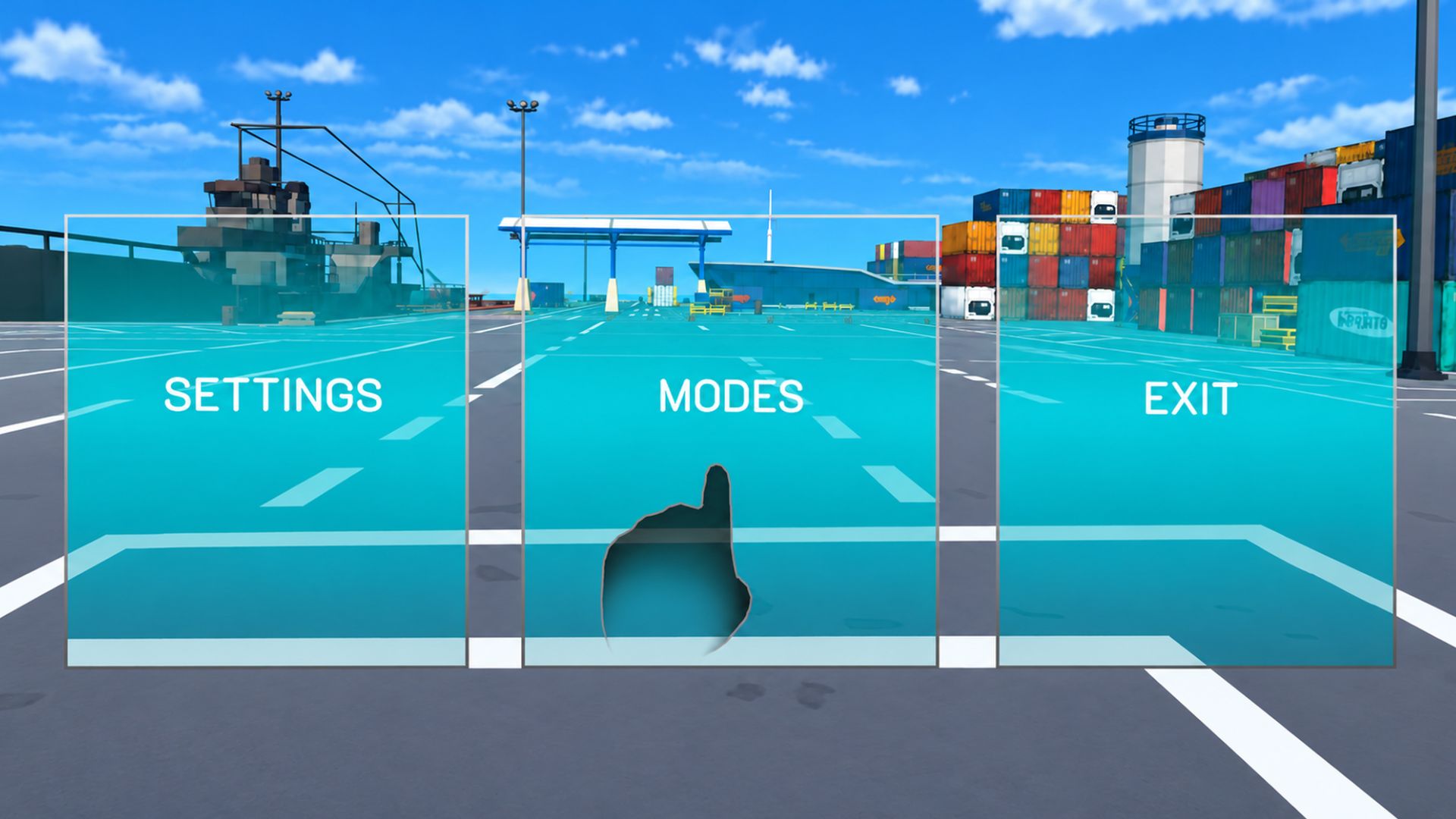
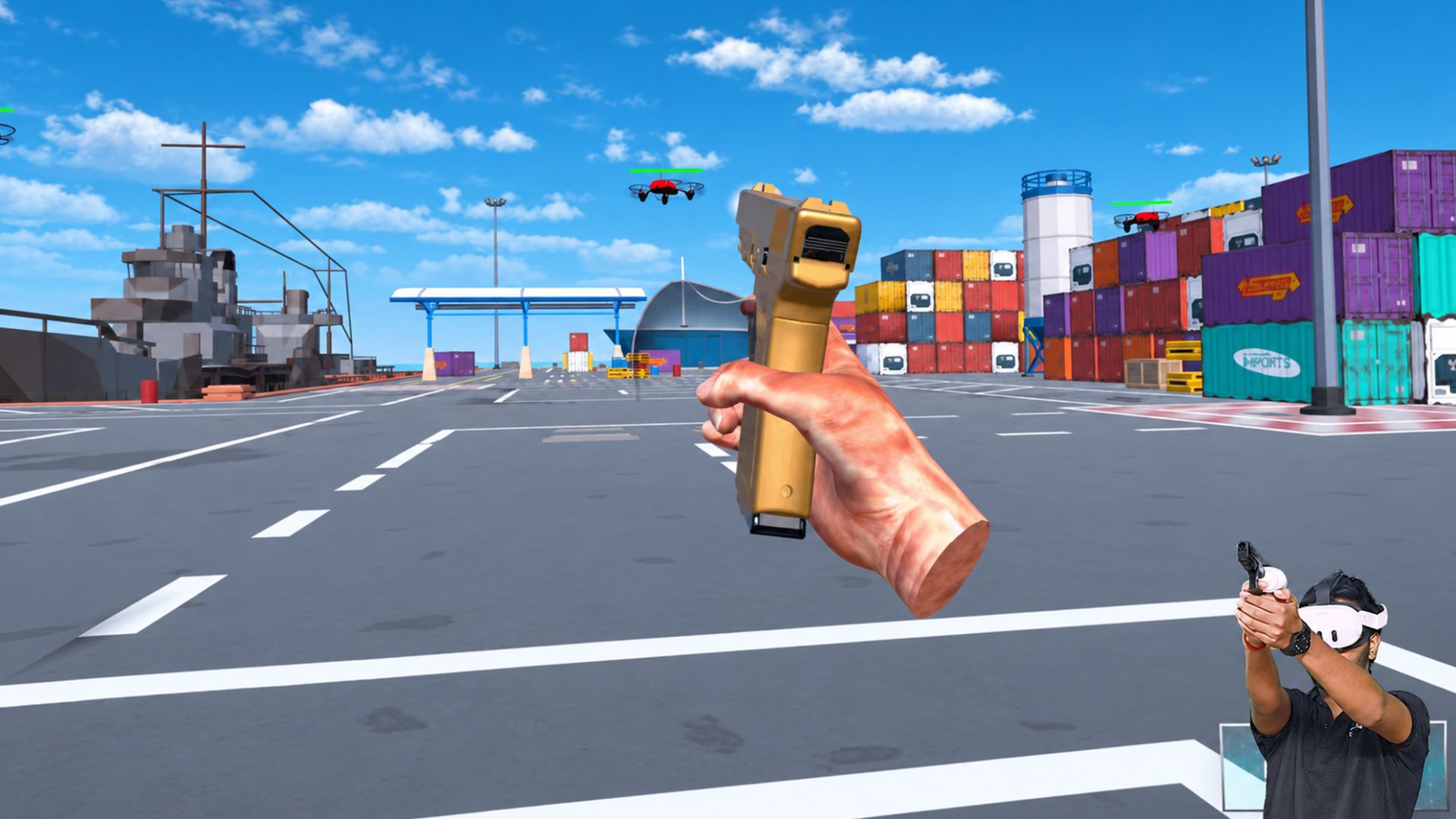
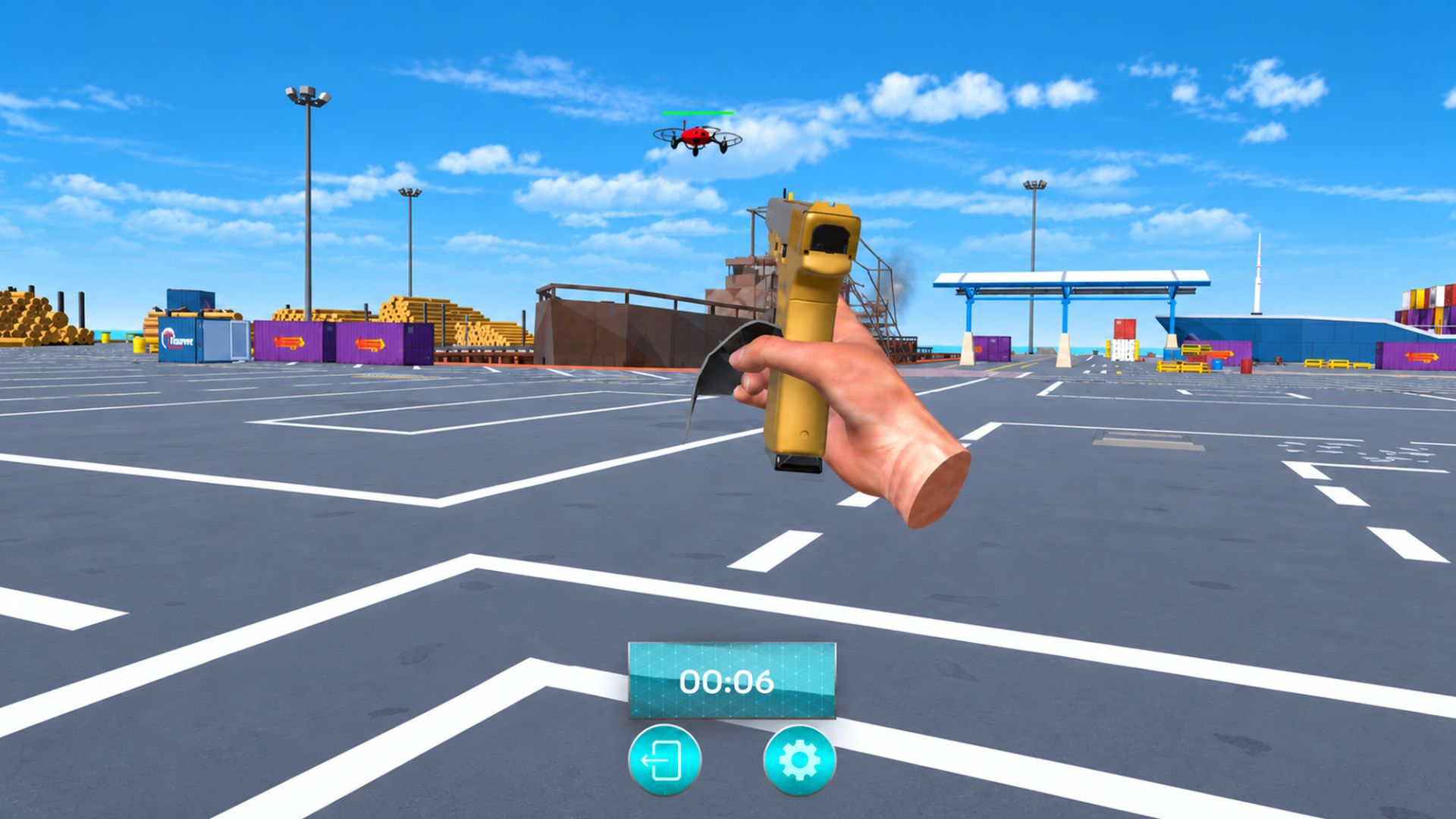
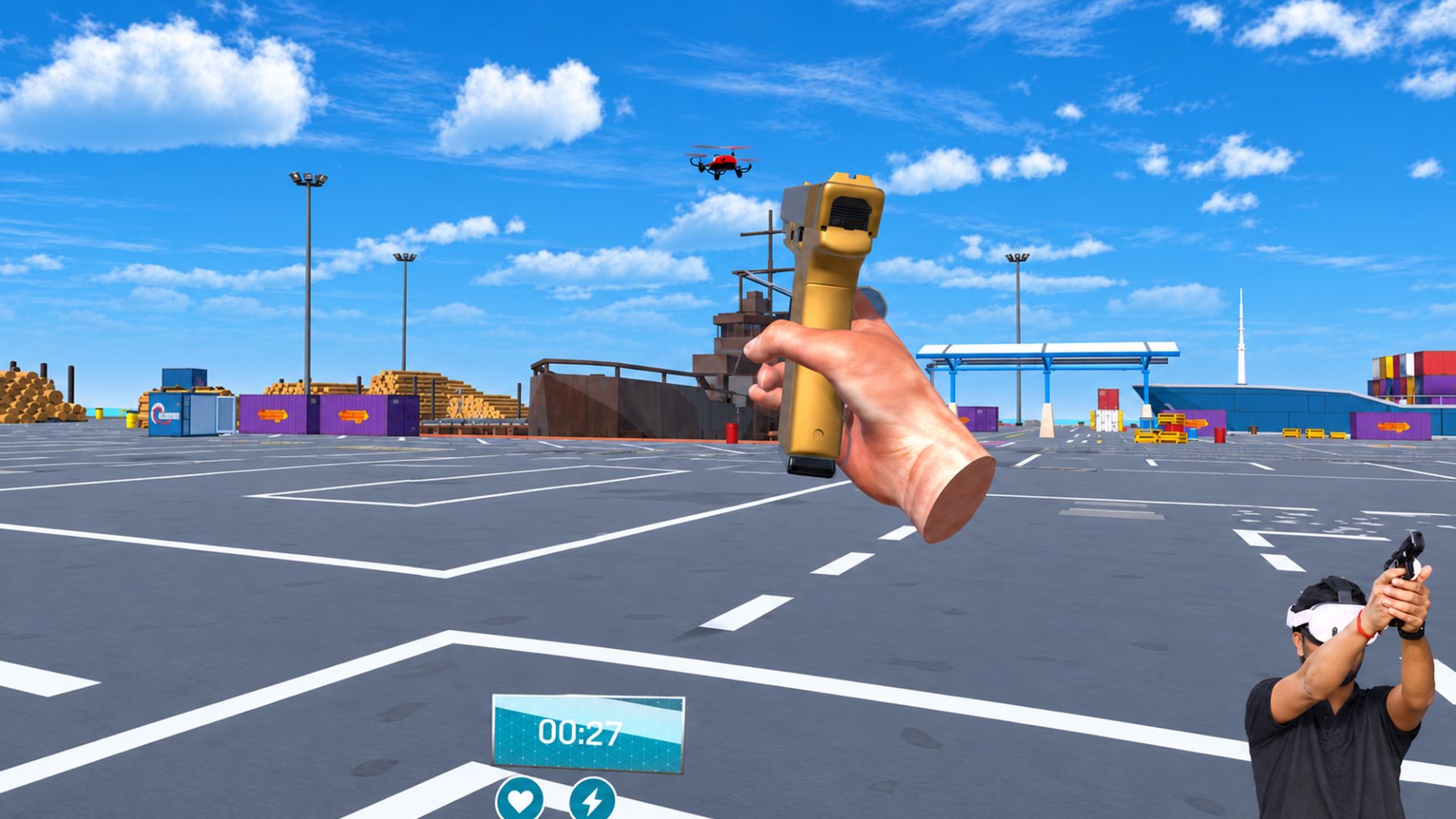
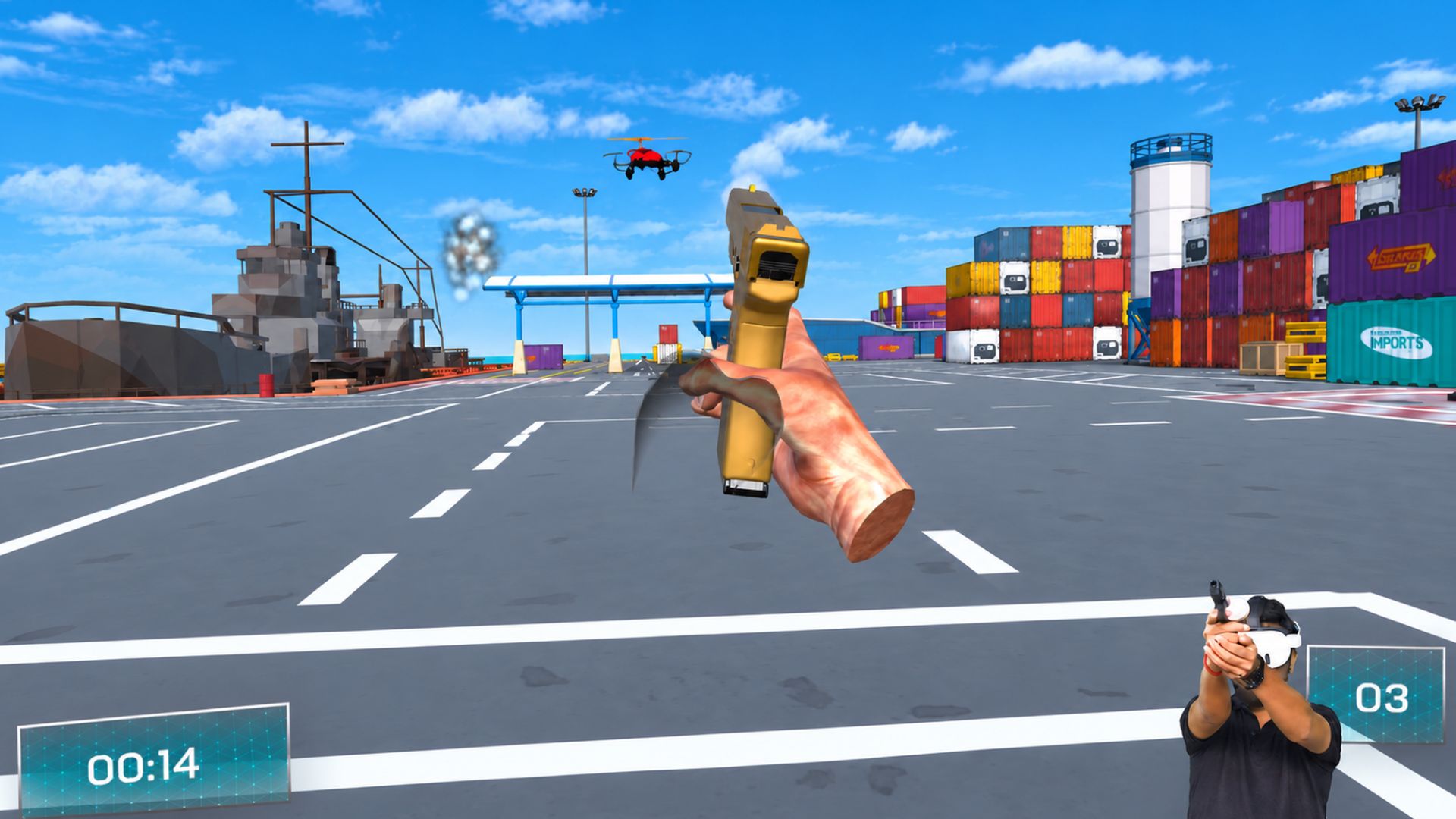
The simulator combines a Meta Quest 3 headset with a physical Glock 17 replica featuring a matching form factor, realistic weight, custom electronics, and a recoil feedback mechanism. The replica connects directly to the virtual experience, allowing trainees to interact with simulated scenarios through a physical training interface.
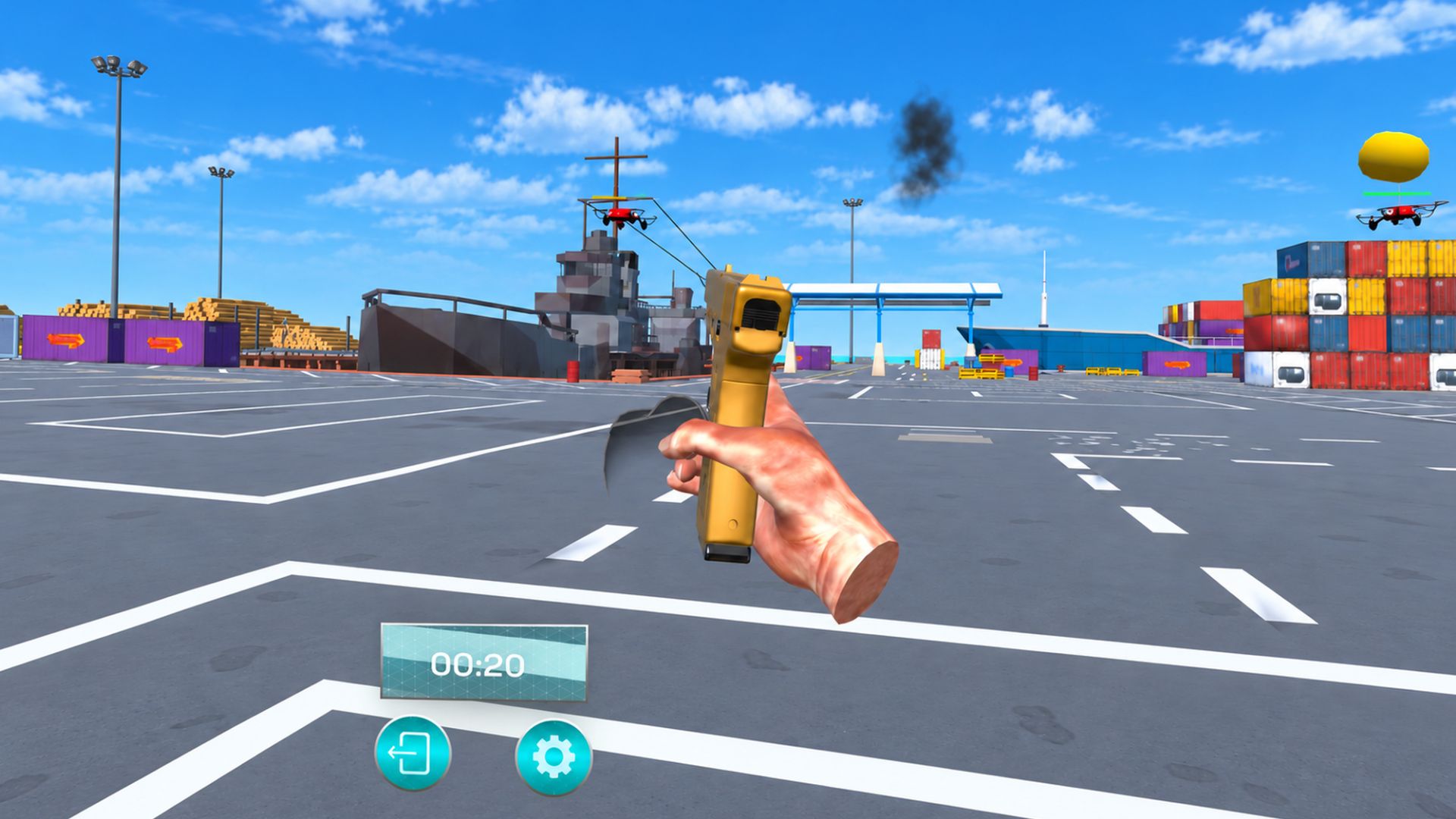
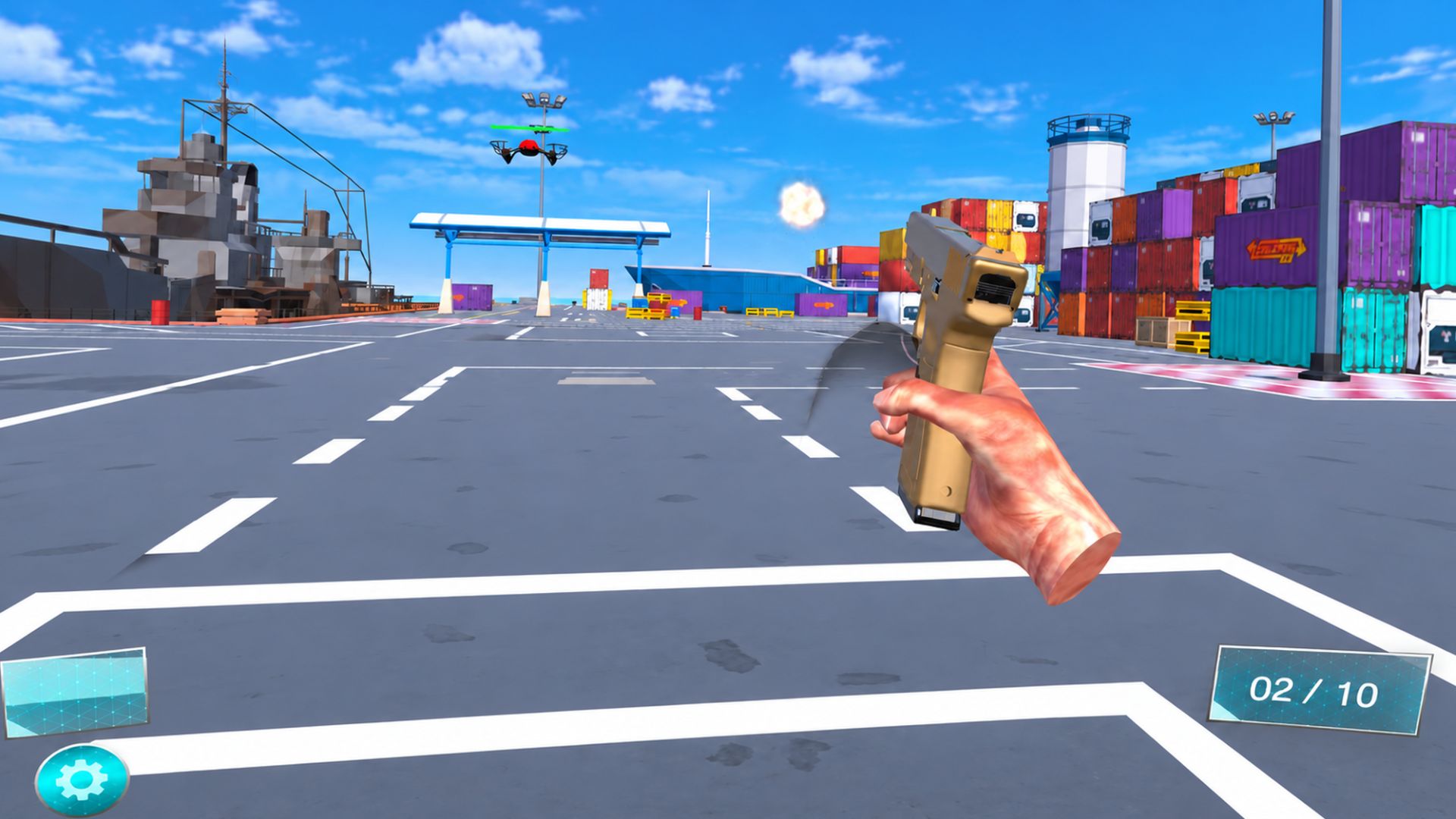
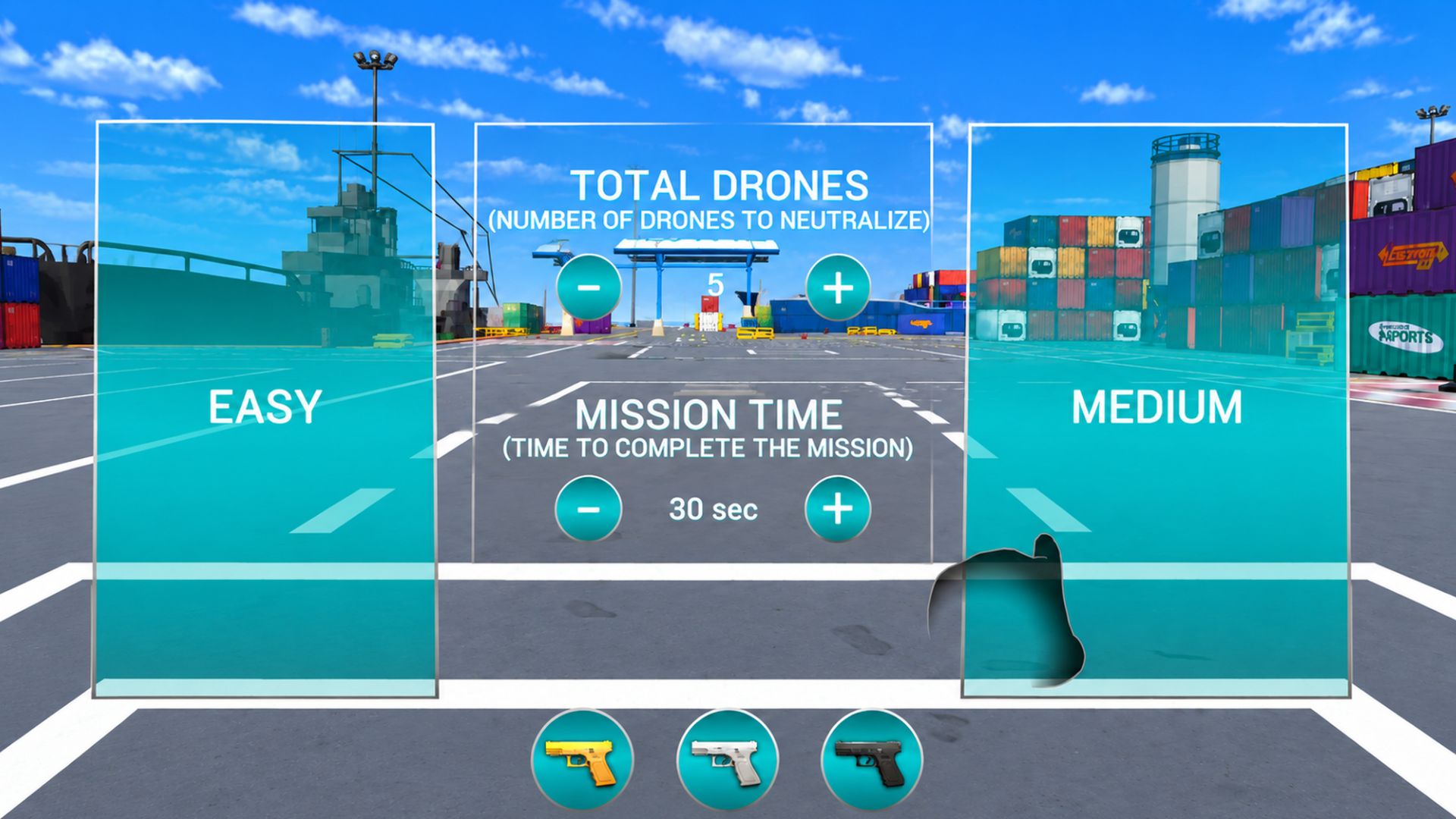
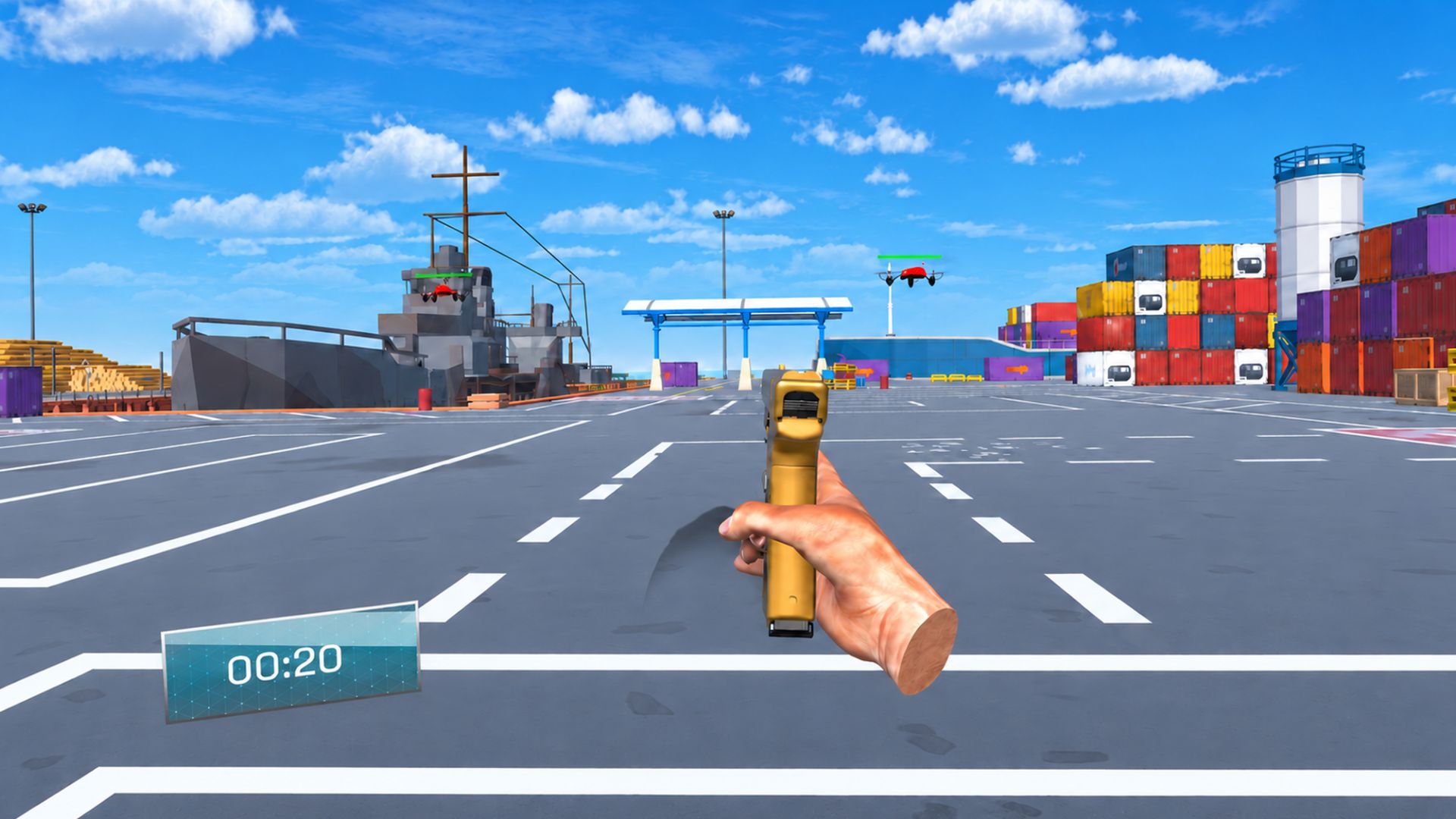
The virtual environment introduces different drone configurations, sizes, speeds, and approach behaviours across varied terrains. Instructors can configure scenarios and adjust difficulty levels to support different stages of familiarisation. Performance analytics provide visibility into trainee progress and simulator performance across repeated sessions.
Key Features & Training Flow
Configurable Drone Scenarios
Virtual environments feature different drone sizes, types, speeds, and simulated approach behaviours for varied familiarisation exercises.
Physical Replica Integration
A tracked Glock 17 replica connects physical handling with virtual interactions through custom electronics and mechanical systems.
Integrated Recoil Feedback
A dedicated recoil mechanism provides physical feedback, enhancing the realism of interactions within the simulated environment.
Multiple Terrain Environments
Configurable virtual surroundings allow instructors to introduce varied environmental conditions and repeatable training scenarios.
Instructor-Controlled Difficulty
Adjustable scenario settings allow instructors to modify training conditions based on trainee familiarity and evaluation requirements.
Performance Tracking & Analytics
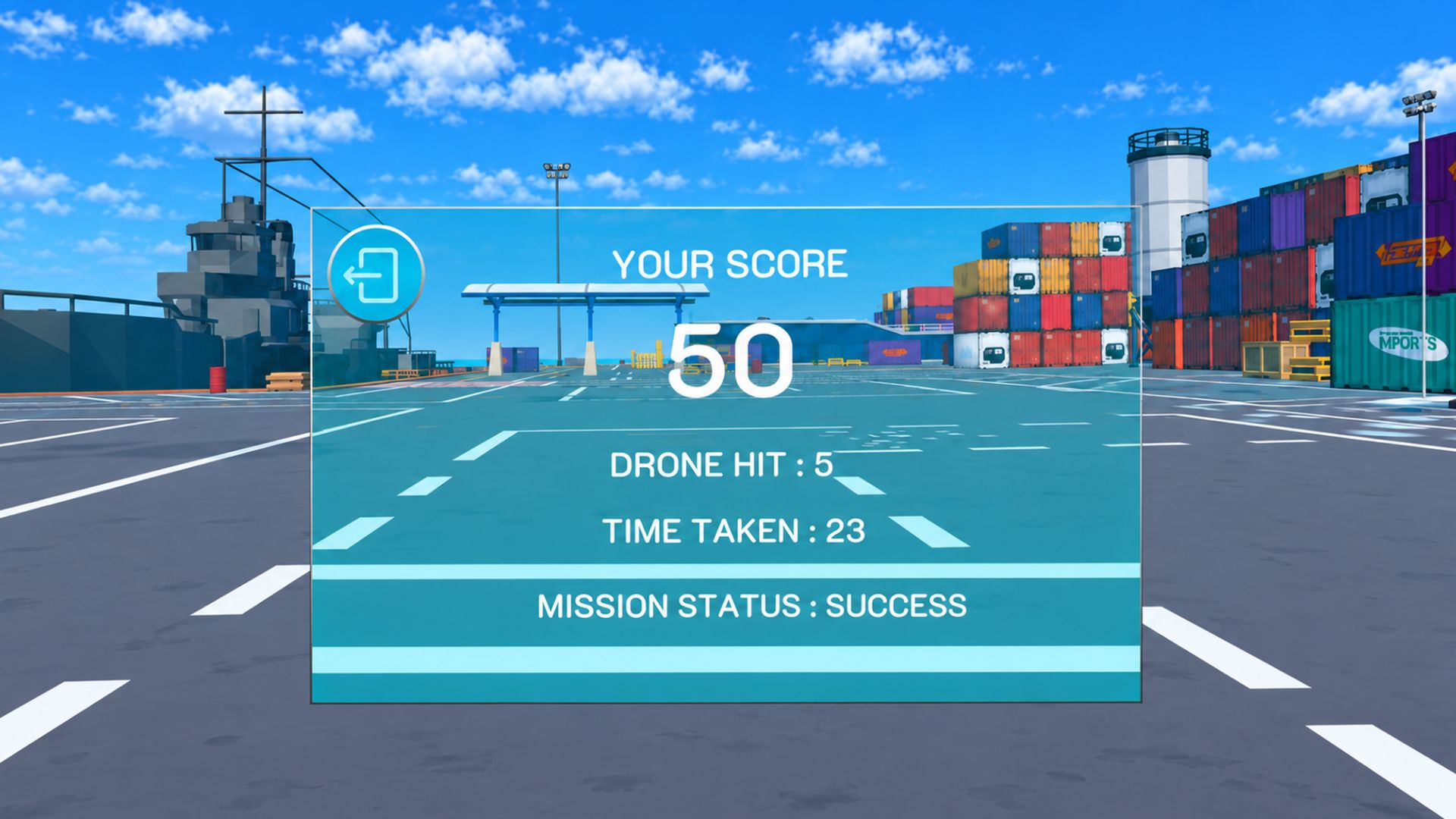
Session data provides instructors with visibility into simulator accuracy, trainee performance, and progress across repeated exercises.
How Spatio Delivered It
Spatio extended its existing firearms simulation technology to develop a dedicated counter drone training experience using Unity3D and Meta Quest 3. The development involved integrating a physical Glock 17 replica with custom electronics, tracking systems, and a mechanical recoil mechanism to connect physical interactions with the virtual environment.
The team also developed configurable drone scenarios, varied terrain environments, and instructor controls to support repeatable training sessions. Performance analytics provided an additional evaluation layer, allowing instructors to review simulator performance and trainee progress.
Developed as a working simulator for pilot evaluation, the solution also establishes a foundation for future expansion to additional physical replica configurations and training applications.
Business Impact
60%+
Reduction in Training Time
75%+
Improvement in Simulator Accuracy
Higher
Trainee Confidence
0
Physical Drones Consumed
Note: Performance figures are based on pilot observations and should not be presented as independently validated operational outcomes.
Why Spatio?
Spatio combines immersive VR environments with custom-built physical interfaces to create realistic and repeatable training experiences. By integrating tracked replicas, mechanical feedback, configurable scenarios, and instructor-led evaluation, we help defence training teams explore new simulation-based familiarisation methods while reducing dependence on physical training equipment.
Explore how immersive simulation and physical interaction can transform repeatable training for emerging aerial threat environments.