
White Label Forklift Simulation Training: A New Revenue Opportunity for Forklift Dealers
Forklift dealerships have traditionally built their businesses around equipment sales, rentals, maintenance, spare parts, and after-sales services.
But their relationships with customers create another opportunity: operator training.
Every business operating forklifts needs competent operators. Whether it is a warehouse hiring new employees, a manufacturing plant introducing different equipment, or a logistics company addressing operator safety concerns, training remains an important operational requirement.
That’s where White Label Forklift Simulation Training becomes an attractive business opportunity.
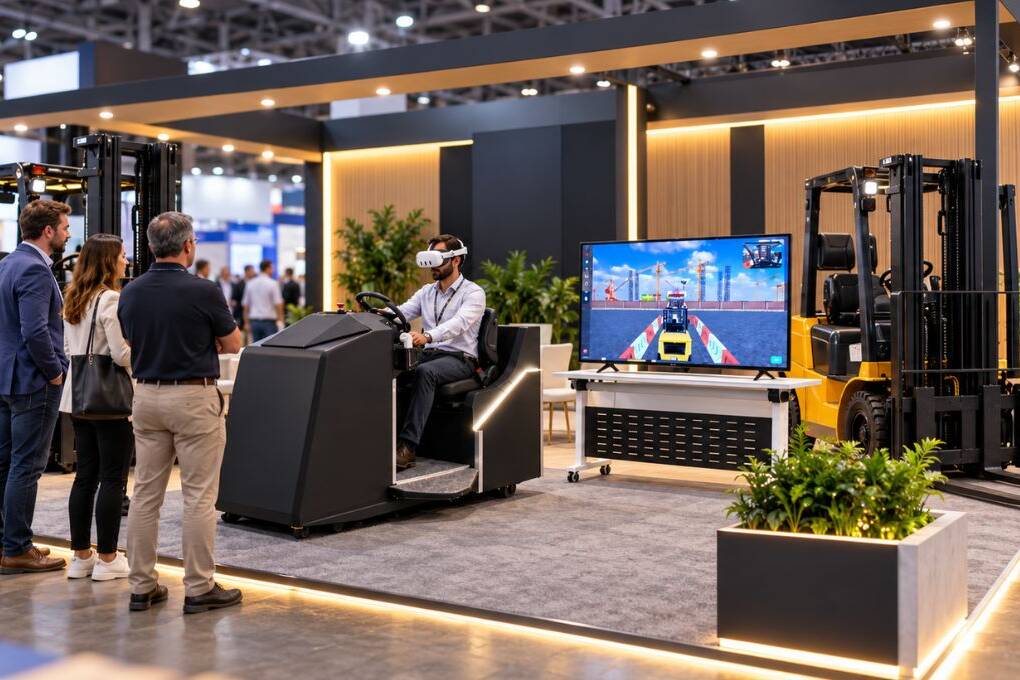
By partnering with VR training solution providers like Spatio, forklift dealers can introduce their own branded, simulation-based training services while leveraging ready-to-deploy technology.
Why Forklift Dealers Are Well Positioned to Enter the Training Business
Unlike a new training business starting from zero, an established forklift dealer already has three important advantages.
An existing customer network: Dealers maintain relationships with warehouses, manufacturers, logistics providers, and industrial facilities that operate forklifts.
Equipment knowledge: Sales and service teams understand forklift specifications, operating controls, maintenance requirements, and common customer applications.
Ongoing customer engagement: Equipment purchases, rentals, servicing, and fleet expansions give dealerships regular opportunities to discuss training requirements.
These advantages can help reduce the effort required to identify potential training customers.
The Challenge of Starting a Conventional Forklift Training Business
A conventional training operation may need physical forklifts, suitable practical training space, qualified instructors, safety procedures, insurance, training materials, and assessment processes.
Providing repeatable practical instruction can also tie up equipment that might otherwise be used for demonstrations, rentals, or other business activities.
For smaller dealerships, building a dedicated training centre may not be financially attractive during the early stages.
This is where simulation-based training can change the entry model.
A dealership could introduce VR-supported instruction at its existing premises and arrange the required real-equipment practical training and workplace evaluation through appropriately qualified personnel, suitable customer facilities, or training partners.
The simulator would reduce dependence on physical equipment for selected learning activities, not eliminate the need for hands-on training.
What Is White Label Forklift Simulation Training?
White Label Forklift Simulation Training allows a dealership or training provider to offer a VR-based forklift training experience under its own business identity, using technology developed by a specialist provider.
Rather than spending resources building VR software, simulated warehouses, operating scenarios, and assessment systems from the ground up, the dealership can adopt an existing platform and customize it for its business.
Depending on the chosen solution and agreement, white-label customization can include:
- Dealer branding: Incorporating the company’s name, identity, and branding into the training experience.
- Training scenarios: Adapting selected exercises to relevant operating procedures or customer requirements.
- Equipment familiarization: Customizing forklift models or control configurations for specific applications.
- Training environments: Introducing warehouse layouts, training tracks, and other simulated working conditions.
- Assessment and reporting: Reviewing operator actions, mistakes, and performance during simulation.
- Integration options: Connecting training information with existing learning systems where supported.
For dealerships, this creates an opportunity to introduce a differentiated service under their own brand while relying on a specialized technology partner for the simulator.
How White Label Forklift Training Can Create Additional Revenue
The opportunity extends beyond selling individual operator training sessions.
Dealerships can explore several service offerings based on their customer requirements and available instructional capabilities.
1. Operator Training Programs
A dealer can offer VR-supported learning as part of a broader instructor-led training program.
New operators can practise selected tasks, including driving, turning, pallet handling, load placement, and hazard recognition, before progressing to supervised physical exercises.
This can give trainees opportunities for repeatable simulated practice while reserving actual forklifts for training activities that require real equipment.
2. Refresher and Corrective Training
Customers may require additional instruction when operators demonstrate unsafe practices, experience accidents or near misses, or are assigned different types of forklifts.
imulation can support targeted training on identified weaknesses.
For instance, a trainee who repeatedly makes unsafe turning decisions could practise relevant scenarios and receive feedback in a controlled virtual environment.
The simulator’s assessment results can inform further instruction, but they do not replace the employer’s required assessment of actual workplace performance.
3. Equipment-Specific Familiarization
A dealership supplying different forklift models may also offer familiarization sessions around selected equipment configurations.
White-label solutions with equipment customization options can support this approach.
For customers introducing unfamiliar equipment, simulation can help explain operating controls and procedures before supervised real-world use.
4. Corporate Training Packages
Dealerships serving customers with multiple facilities could explore structured training arrangements covering several operator groups or locations.
A reusable simulator can help standardize selected exercises across sessions, while qualified trainers continue to address the specific equipment and workplace conditions involved.
These offerings can create additional service revenue, although the appropriate commercial model depends on customer demand and the dealership’s training capabilities.
How Spatio Helps Dealerships Introduce White Label Forklift Simulation Training
Developing a forklift VR simulator independently requires significant work in 3D simulation, equipment interactions, training scenario development, VR software engineering, testing, and deployment.
For most forklift dealerships, building those capabilities internally is outside their core business.
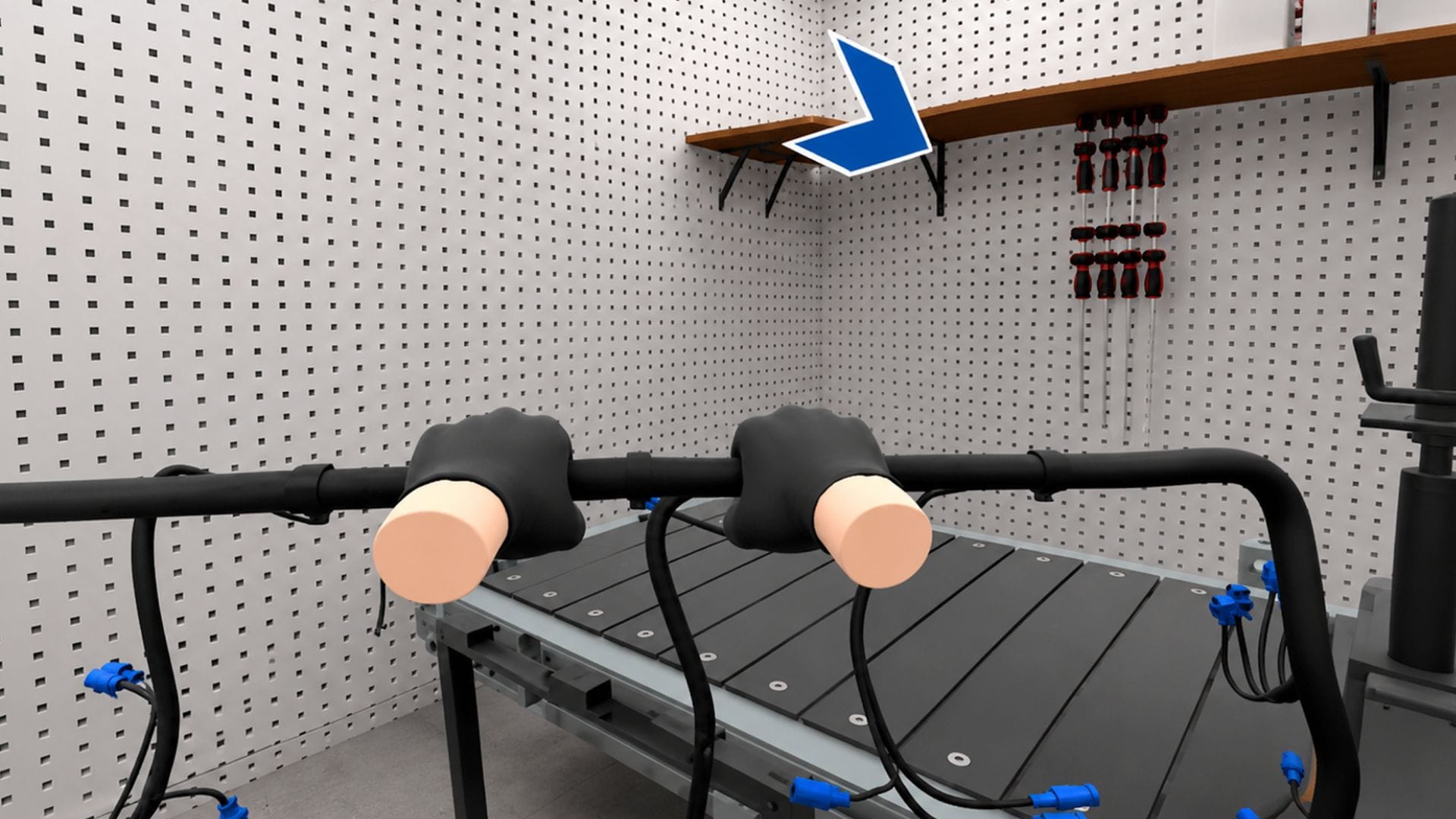
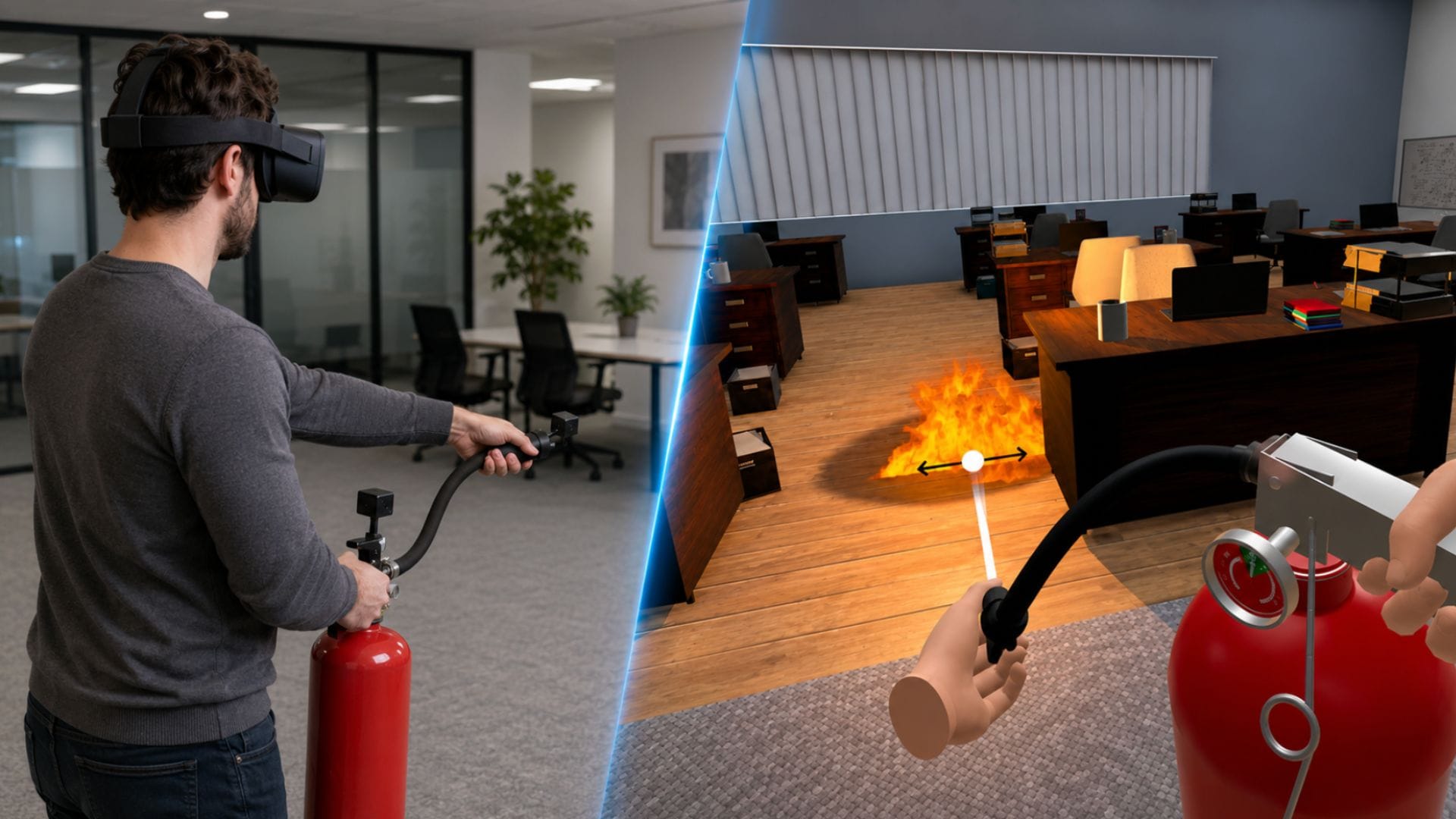
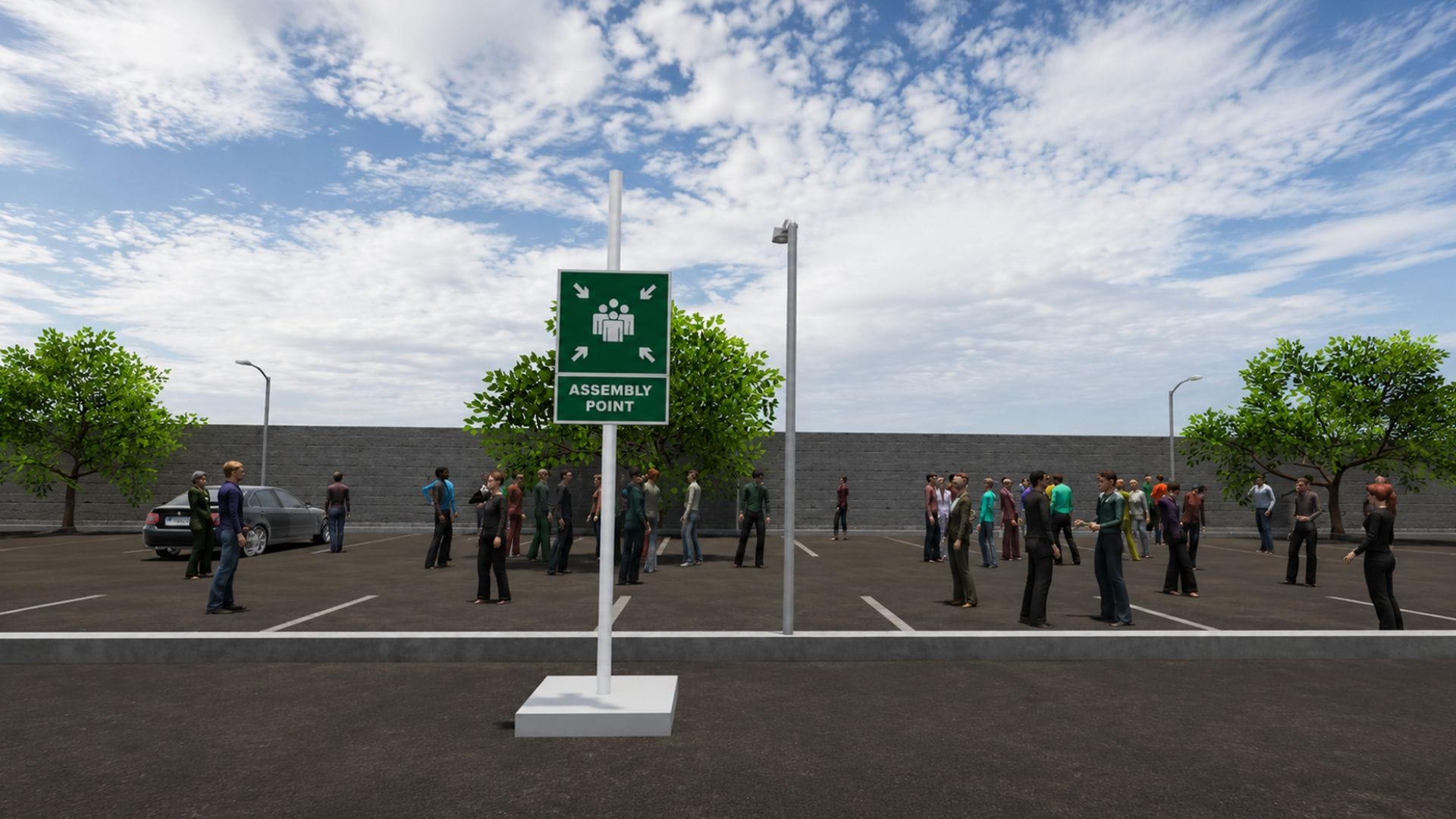
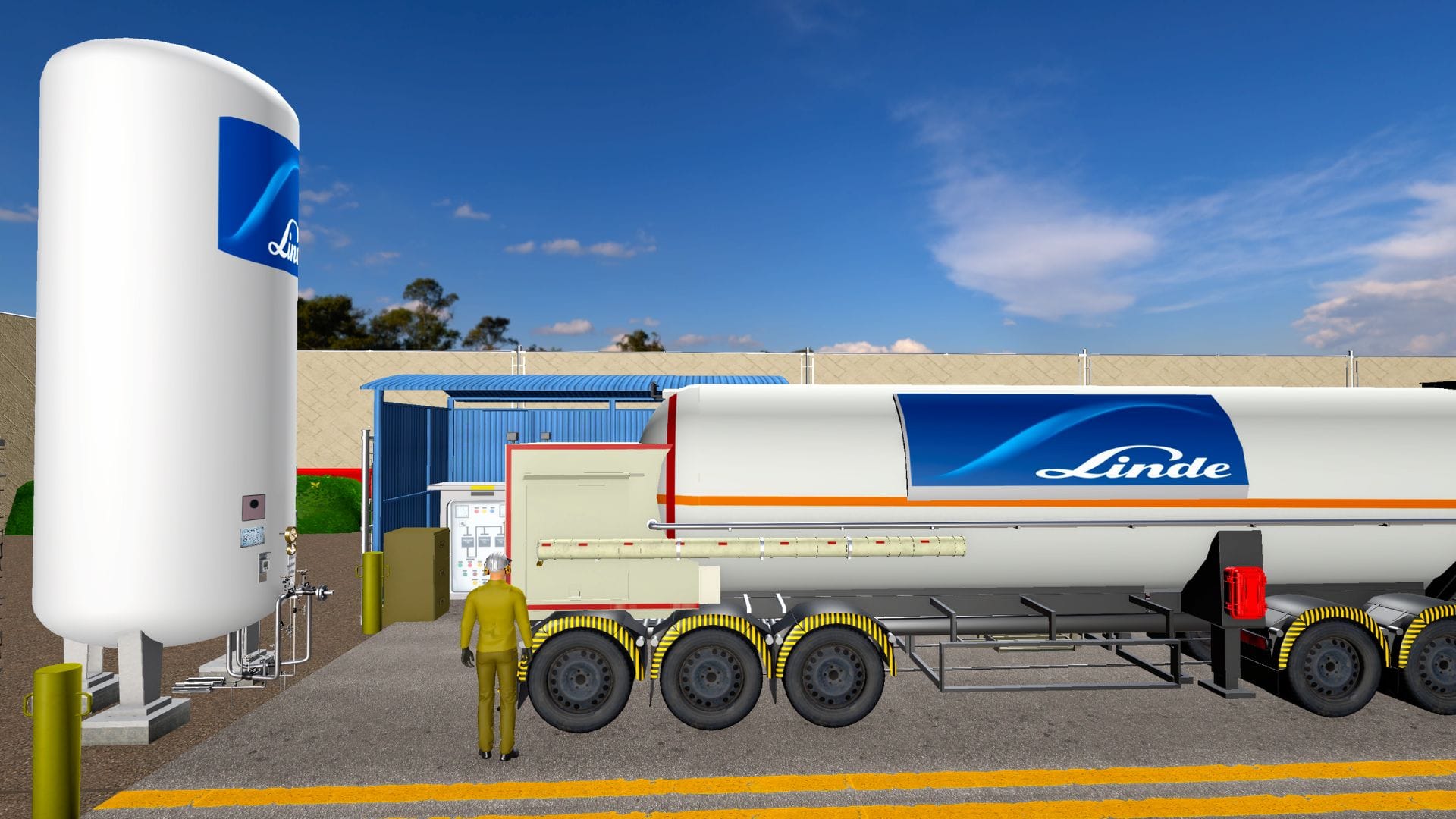
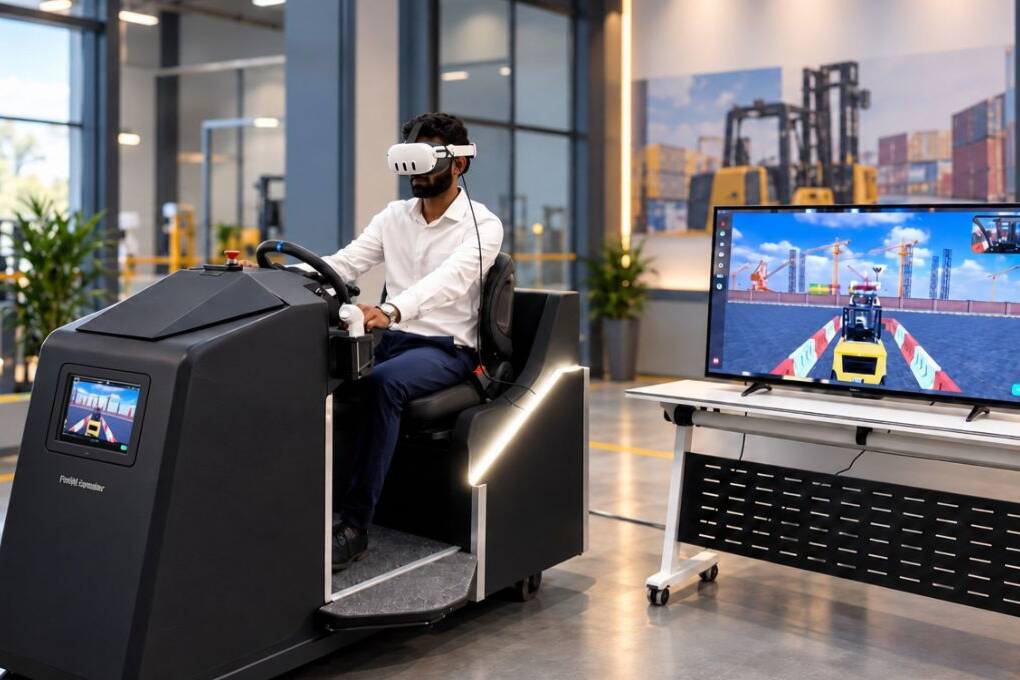
Spatio offers a ready-to-deploy Forklift VR Training Simulator with branding and white-label customization options, enabling businesses to explore launching their own training offering without building the underlying simulator software.
The simulator includes six core training areas:
| Training module | Training focus |
| Safety Procedures | PPE, surroundings awareness, and safe startup practices |
| Normal Operation | Driving, turning, lifting, stacking, and unloading |
| Unsafe Conditions | Poor visibility, unstable loads, and unsafe manoeuvres |
| Error Recognition | Identifying operating mistakes and their consequences |
| Emergency Handling | Responding to sudden obstacles and critical situations |
| Assessment Mode | Reviewing operator actions and consistency |
The simulator supports repeatable scenario-based learning, with optional controller-integrated configurations for selected deployments.
For dealerships seeking differentiation, Spatio can discuss white-label branding, equipment models, operating procedures, virtual environments, languages, reporting, and learning management system integration.
A Reusable Training Asset, Not Just a One-Time Course
Spatio publishes a single-payment ownership model for its ready-to-deploy simulators, providing an alternative to ongoing per-trainee content subscriptions for internal training use.
This allows organizations to evaluate the simulator as a reusable training asset.
For a commercial dealership training third-party customers, however, the agreement must explicitly cover the intended white-label branding, commercial training rights, deployment scope, and any additional customization or support charges.
This distinction is important when calculating the economics of a training business.
The objective is to give dealerships an established simulation foundation that can be adapted into a branded customer-facing training service.
From Forklift Dealer to Complete Equipment and Training Partner
Forklift dealers already help customers select, purchase, maintain, and operate material-handling equipment.
White Label Forklift Simulation Training introduces an opportunity to extend that relationship into structured operator development.
Instead of referring every training enquiry elsewhere, dealerships can explore building their own branded training offering, supported by specialized simulation technology and qualified practical training arrangements.
They gain an opportunity to diversify revenue, strengthen customer relationships, and differentiate their services without developing an entire VR platform internally.
Spatio’s ready-to-deploy Forklift VR Training Simulator offers a starting point for dealerships that want to introduce white-label, simulation-based training under their own brand.
Launch Your Own Branded Forklift VR Training Offering
Explore Spatio’s white-label forklift simulator customization options and see how the solution could fit your dealership’s training business model.