
Why Forklift Training Companies Should Adopt a Hybrid Training Model With VR Simulation
How combining virtual simulation with hands-on forklift training can improve training capacity, reduce operating costs, and create new business opportunities.
Training forklift operators has always involved a combination of instruction, equipment, and hands-on practice. But as training providers look to serve more operators, relying exclusively on physical forklifts for every practical exercise creates operational limitations.
Every session requires access to equipment, qualified instructors, an appropriate training area, and sufficient time for each trainee to practise. As enrolments grow, training companies often need to increase those resources.
What if more of the learning process could happen before a trainee ever steps onto a physical forklift?
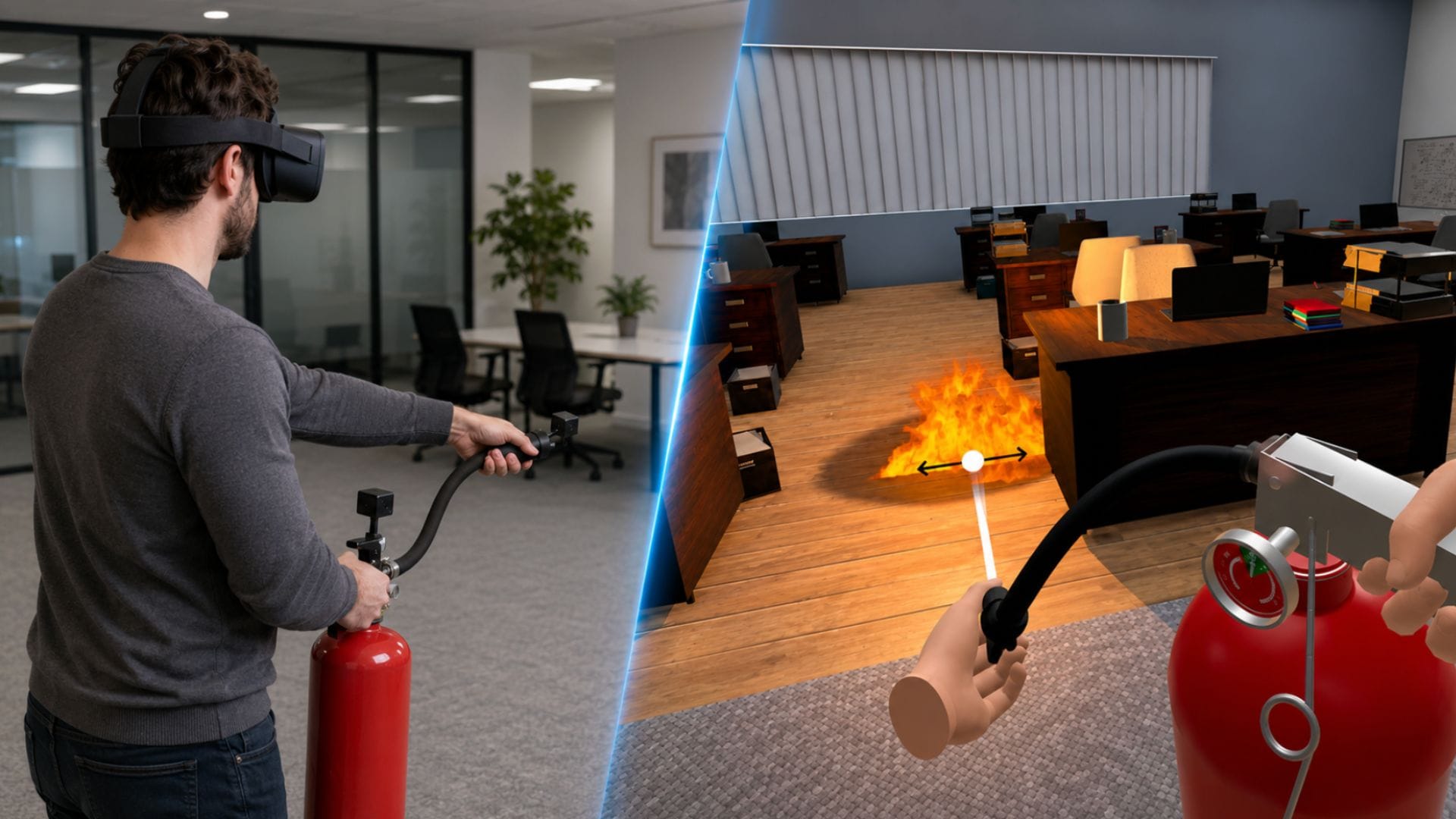
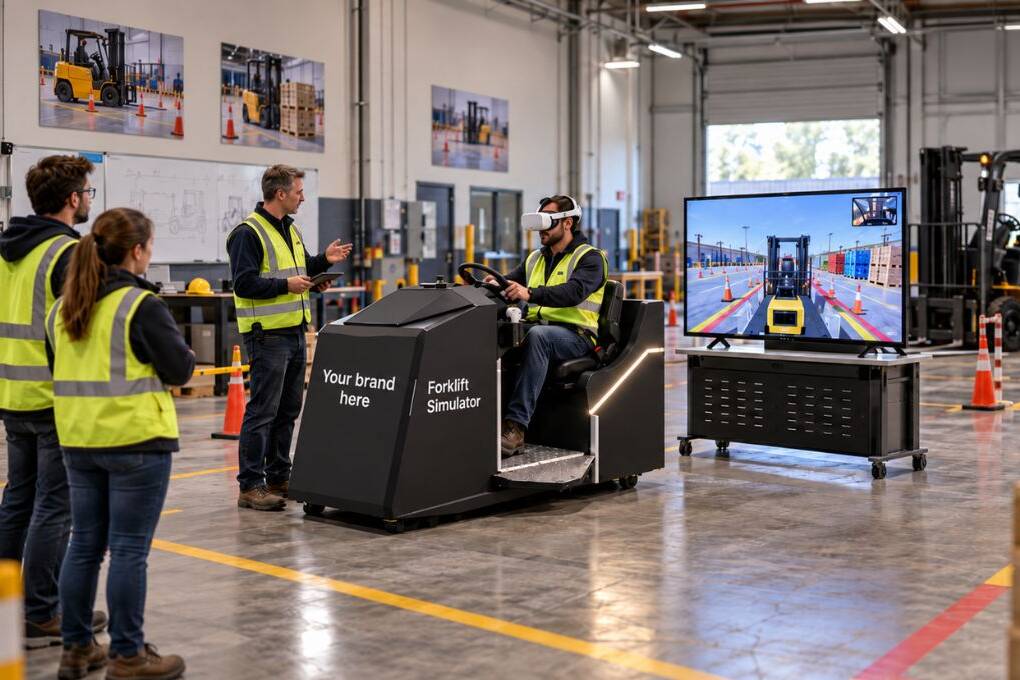
That’s the opportunity presented by a hybrid forklift training model, combining Virtual Reality (VR) simulation with traditional hands-on instruction and practical evaluation.
For forklift training companies, this isn’t simply about introducing new technology. It’s about reconsidering how training hours, equipment availability, instructor time, and training capacity are managed.
The Cost of Delivering Traditional Forklift Training
Consider a training provider delivering four hours of individual practical instruction to 1,000 trainees annually.
That amounts to 4,000 trainee-hours a year, before accounting for setup, equipment checks, administrative work, and movement between training exercises.
For illustration, assume an instructor-led training session costs $125 per hour, including the resources covered by that rate.
| Training metric | Annual estimate |
| Trainees | 1,000 |
| Practical training per trainee | 4 hours |
| Total trainee-hours | 4,000 |
| Training session cost | $125/hour |
| Annual session cost | $500,000 |
This is a hypothetical operating scenario, not a US industry average.
The challenge extends beyond cost. At 250 operating days and eight productive hours per day, one training station has a theoretical maximum of 2,000 session-hours annually. Delivering 4,000 one-to-one trainee-hours therefore requires at least two fully utilized stations or a different operating schedule.
Real capacity will be lower after downtime, changeovers, inspections, and other interruptions.
Adding more trainees without adding equivalent equipment and instructor capacity becomes difficult.
How Hybrid Forklift Training Changes the Economics
A hybrid model moves selected early-stage learning activities into simulation while retaining the required real-world practical components.
For example, a training company might design a four-hour learning sequence with:
Two hours of VR-based equipment familiarization, driving practice, load-handling scenarios, and hazard recognition.
Two hours of supervised physical forklift exercises and practical assessment.
This is only an illustrative course structure. OSHA does not prescribe a universal two-hour
VR/two-hour physical split, and the appropriate duration depends on operator competency, the truck type, and workplace conditions.
For 1,000 trainees, this approach would shift 2,000 trainee-hours to VR and retain 2,000 physical trainee-hours.
That represents a 50% reduction in physical forklift practice hours in the modeled course, not necessarily a 50% reduction in total training cost.
The company must still pay for simulator supervision, equipment, support, facilities, qualified instructors, and necessary real-world evaluation.
A credible business case should calculate:
Annual net benefit = Avoided physical training costs + additional contribution from increased capacity − incremental VR operating costs.
The benefit becomes more significant when reduced physical equipment usage allows the business to accommodate additional paying trainees or reduce genuine operating expenses.
Training More Operators Without Proportionally Expanding Physical Infrastructure
A physical forklift training track can accommodate only a limited number of simultaneous exercises under controlled conditions.
VR creates an opportunity to separate different learning activities.
One trainee could practise virtual load placement or pedestrian hazard recognition while another completes supervised practical training on a physical forklift.
This can create a more efficient training workflow, particularly when multiple simulators are available and instructor-to-trainee supervision arrangements are appropriate.
However, VR throughput needs to be measured realistically.
If each operator needs two hours of VR practice, 1,000 trainees require 2,000 simulator-hours annually. One simulator operating eight productive hours per day for 250 days would be at its theoretical full capacity.
Additional simulators, longer operating hours, or shorter validated VR sessions would be necessary to accommodate more volume.
The goal should be to improve training throughput per dollar of invested training capacity, not assume unlimited simulator capacity.
What About OSHA Compliance?
Under 29 CFR 1910.178(l), OSHA requires powered industrial truck operator training to include formal instruction, practical training, and evaluation of the operator’s performance in the workplace.
VR may support instruction, decision-making practice, and preparation for hands-on training. It does not, by itself, eliminate the required real-equipment practical training and workplace performance evaluation.
The employer remains responsible for ensuring operators are trained and evaluated by appropriately qualified people and are competent for their assigned truck and working conditions.
A hybrid training company should therefore design VR as one component of an effective OSHA-aligned training program, rather than marketing a standalone simulator completion as OSHA certification.
OSHA reference:
https://www.osha.gov/laws-regs/regulations/standardnumber/1910/1910.178
Why White-Label VR Training Creates Another Business Opportunity
Cost reduction is only one side of the opportunity.
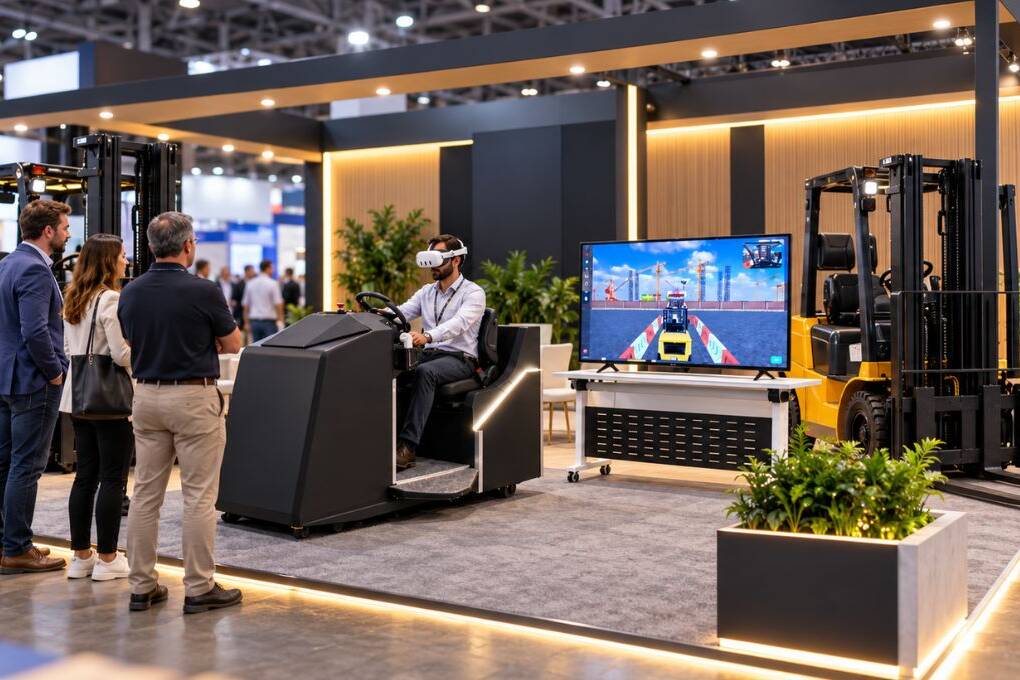
Training companies can use VR to differentiate their course offerings and establish recognizable training programs under their own brands.
For instance, a training provider could develop branded simulated training modules, introduce scenario-based evaluation, and provide a consistent training experience across its locations.
Instead of building the entire simulation platform internally, companies can work with specialized technology providers.
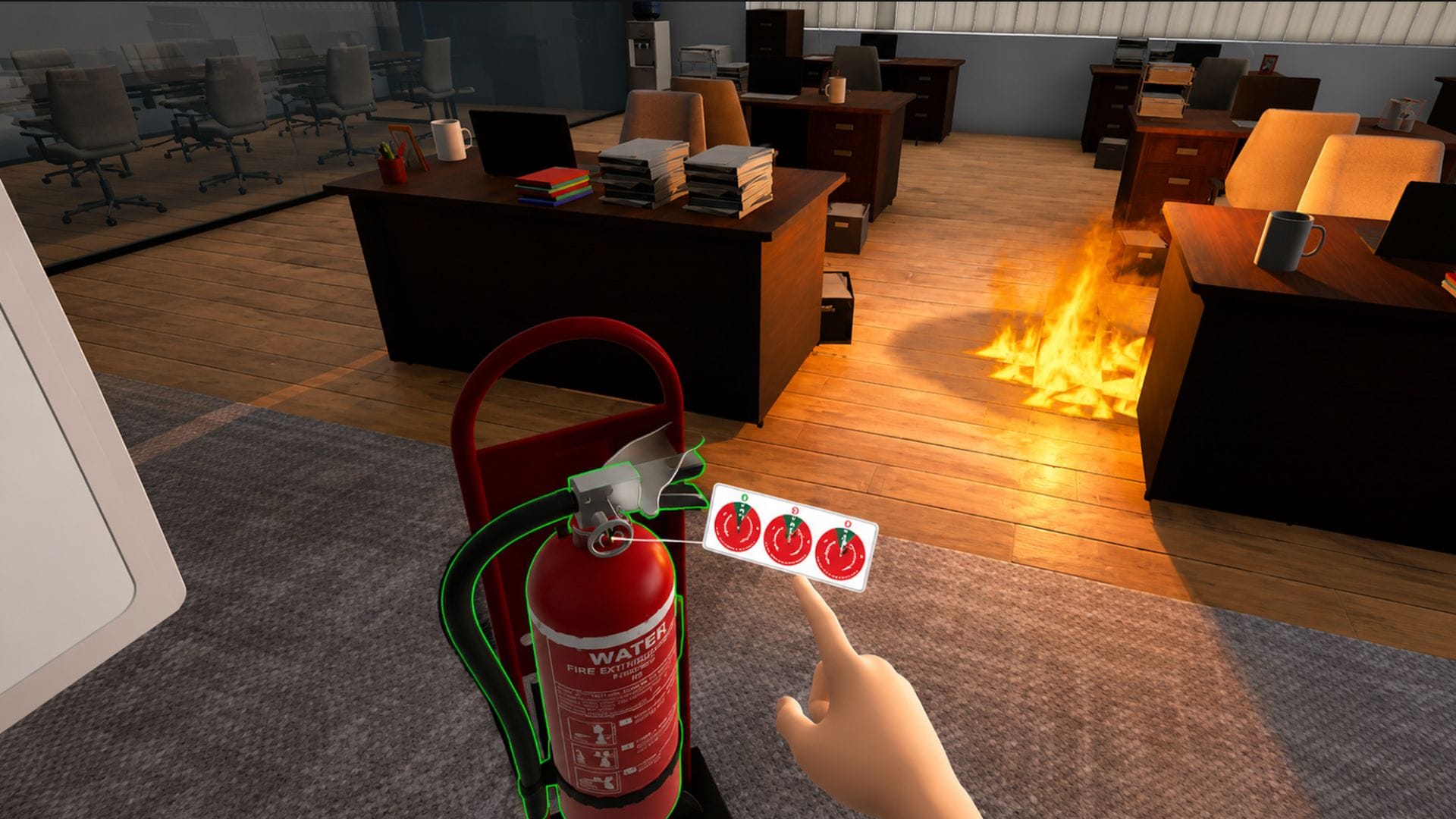
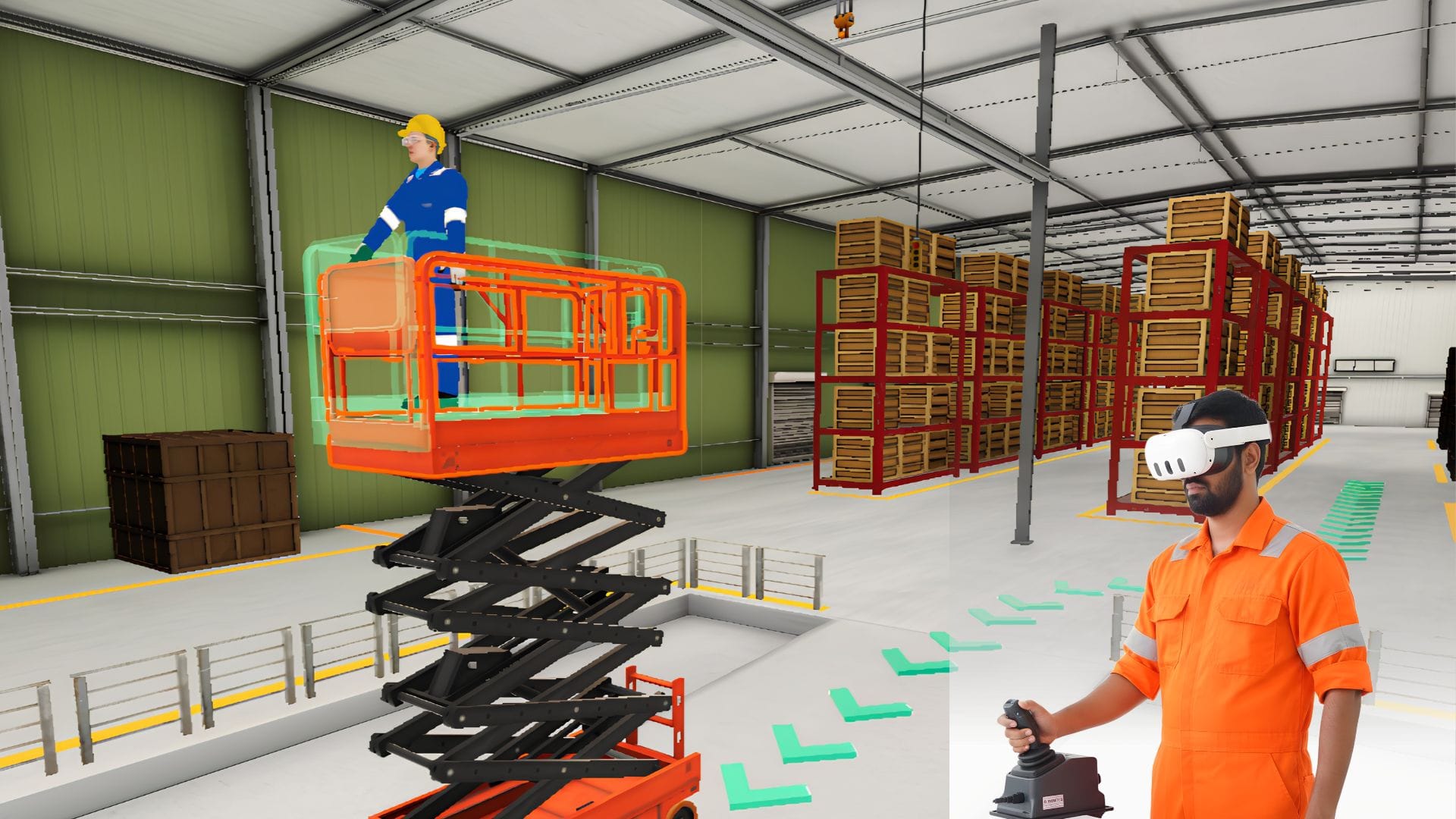
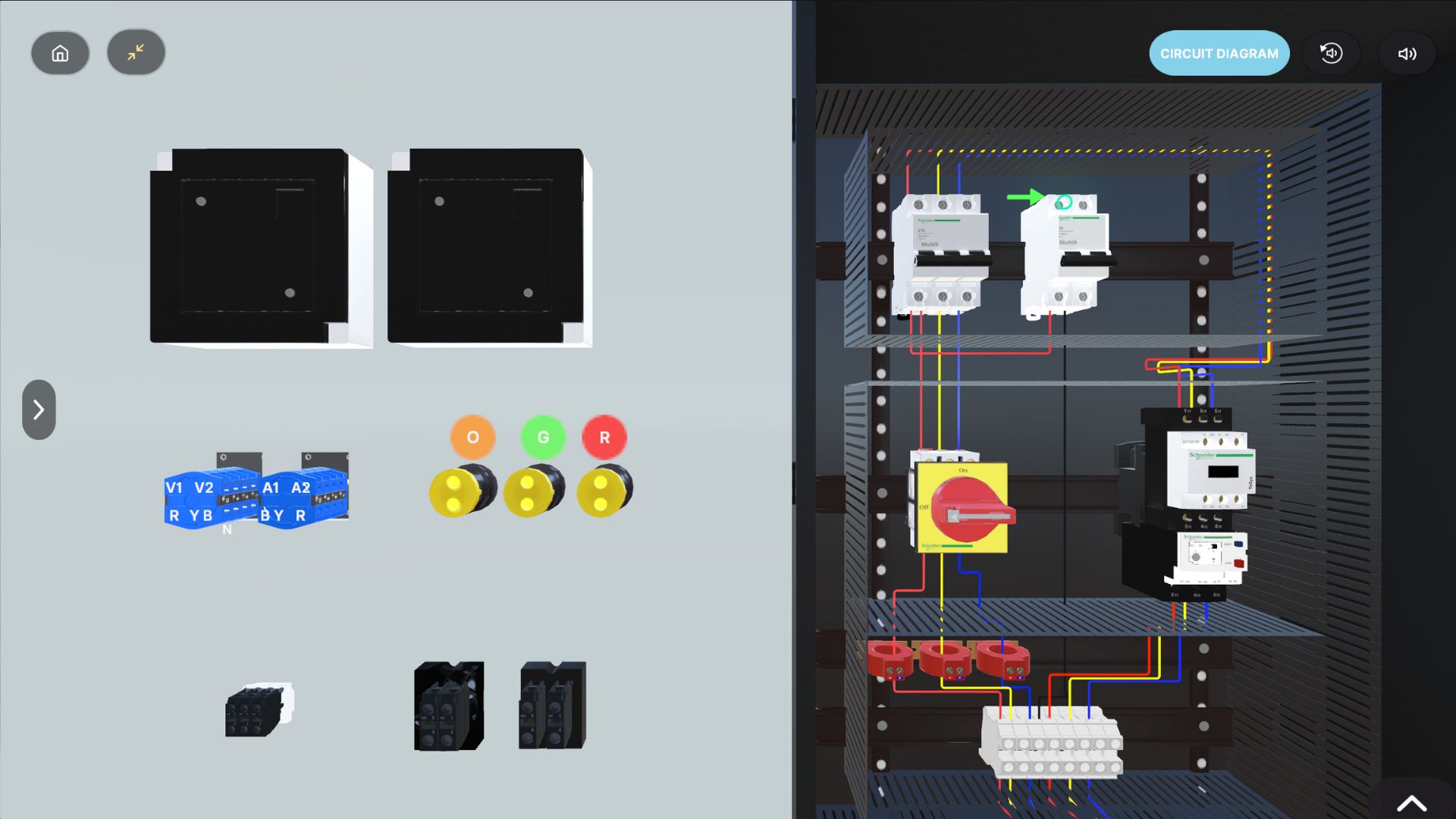
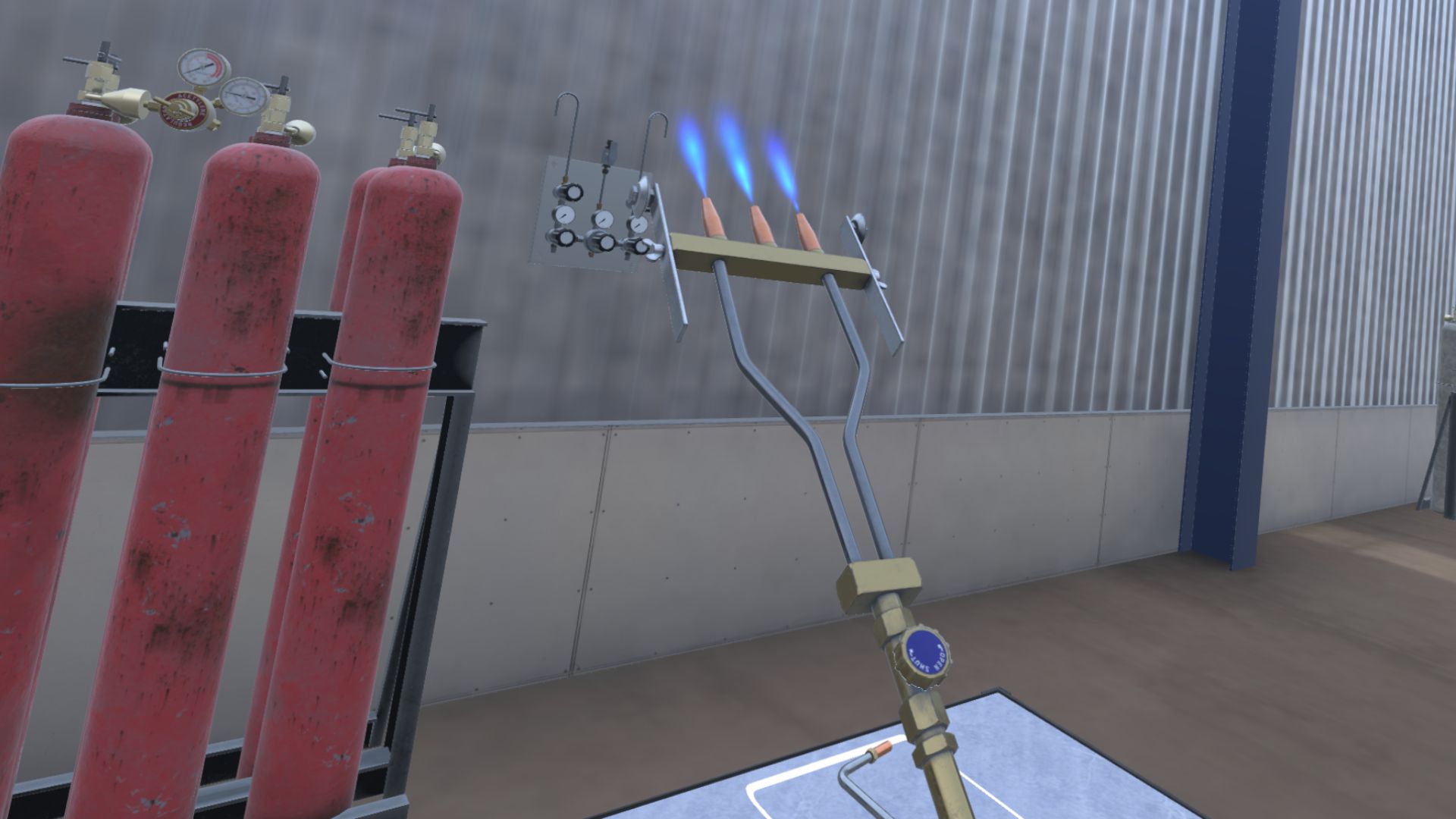
Spatio offers a ready-to-deploy Forklift VR Training Simulator with white-label and customization options.
Its published solution includes six training areas covering safety procedures, normal operation, unsafe conditions, error recognition, emergency handling, and assessment.
Spatio can also customize branding, equipment and controller models, operating procedures, environments, languages, and reporting based on project requirements. LMS integration and controller-based configurations are customization options to discuss for individual deployments.
Its single-payment ownership approach provides an alternative to recurring per-trainee content subscriptions, although customization and additional services may carry separate charges.
That means a training organization can explore introducing VR-based learning under its own identity without having to establish an internal VR software development team.
The Next Step for Forklift Training Providers
Physical forklift training will remain essential. But using expensive physical equipment for every stage of familiarization and repetition may not always be the most efficient model.
Hybrid training gives providers an opportunity to reserve physical equipment for the activities where it matters most, while introducing repeatable, scenario-based learning earlier in the process.
For companies looking to expand capacity, standardize programs, or develop branded training offerings, Spatio’s Forklift VR Training Simulator provides a practical starting point.
Explore Spatio’s white-label forklift VR training solutions and request a demonstration.