
From Equipment Demonstration to Interactive Product Experience: How Forklift OEMs Can Use VR to Drive Product Adoption
A forklift demonstration typically gives potential buyers a closer look at the equipment, its specifications, controls, and operating capabilities.
But there’s a difference between watching a forklift operate and experiencing how it works.
For manufacturers competing in the US material-handling market, that difference presents an interesting opportunity.
What if a potential customer could virtually operate a forklift, navigate warehouse aisles, handle pallet loads, and experience operating scenarios specific to the equipment before scheduling a physical demonstration?
That’s where Virtual Reality (VR) simulation can change the conventional product demonstration.
Instead of relying only on brochures, videos, specifications, and physical demonstrations, forklift OEMs can introduce interactive, equipment-specific experiences that help customers understand the product through participation.
And the same technology can extend beyond sales into operator familiarization and workforce training.
Why Conventional Forklift Demonstrations Have Their Limitations
Physical forklift demonstrations remain essential when customers need to assess equipment performance, visibility, ergonomics, handling, and suitability for their operations.
However, arranging them isn’t always straightforward.
A manufacturer or dealer may need to coordinate equipment availability, suitable demonstration space, transportation, sales personnel, and customer schedules.
At industry exhibitions, the limitations can be even greater.
Large material-handling equipment occupies significant floor space. Venue restrictions and safety considerations may limit the ability to demonstrate actual lifting, driving, and load-handling operations.
As a result, prospective buyers may see an impressive machine but have limited opportunities to experience its operational capabilities.
A static equipment display can communicate specifications. An interactive experience can help explain how those specifications relate to everyday operations.
VR provides an additional way to deliver that experience.
From Watching a Product to Experiencing Its Operation
Imagine a forklift OEM exhibiting its latest electric forklift at an industrial trade show.
The physical equipment is displayed at the booth, alongside product specifications and promotional materials.
Visitors can inspect the truck, understand its capacity, and speak with sales representatives.
Now imagine adding an equipment-specific VR simulation to the same booth.
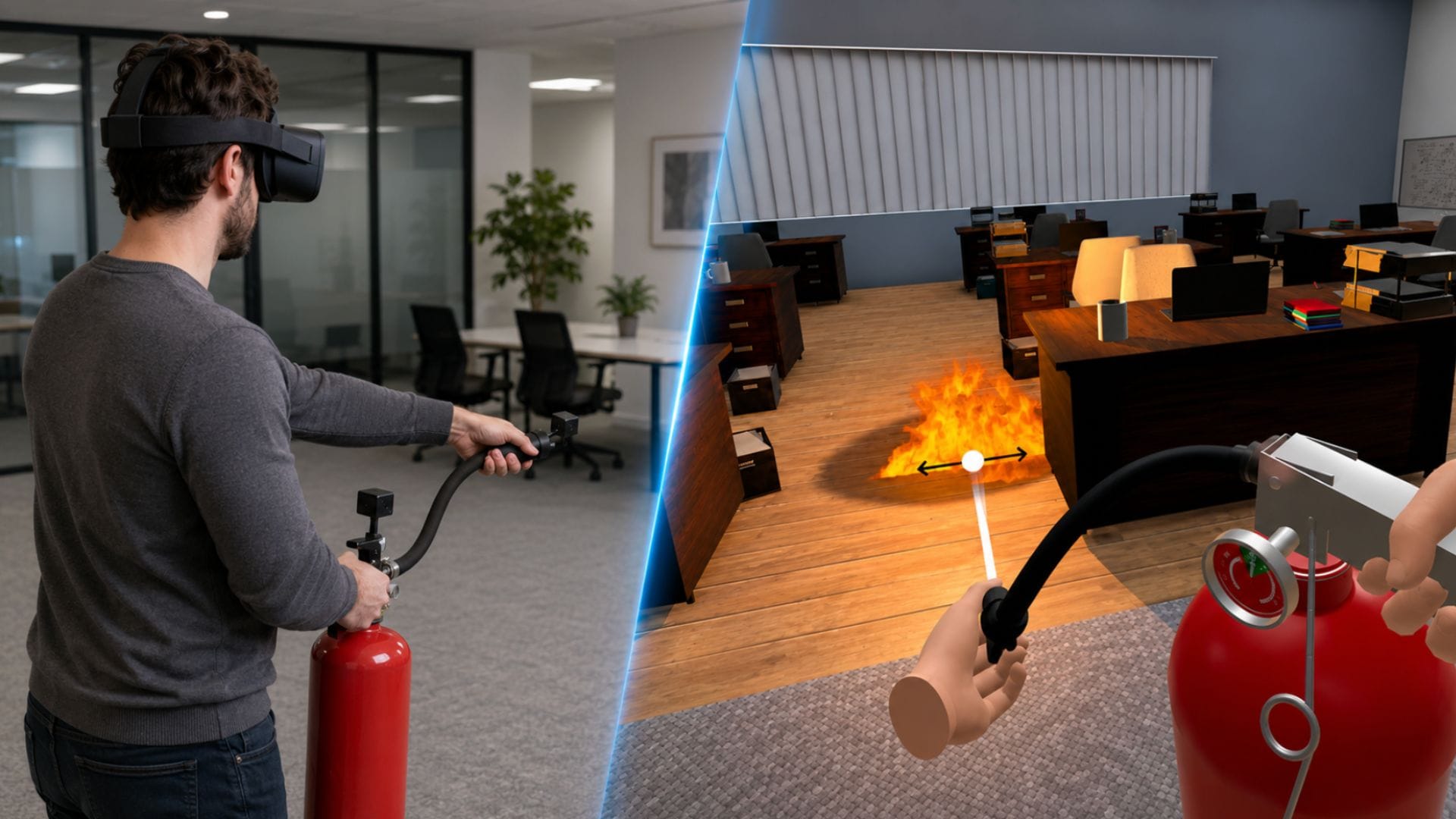
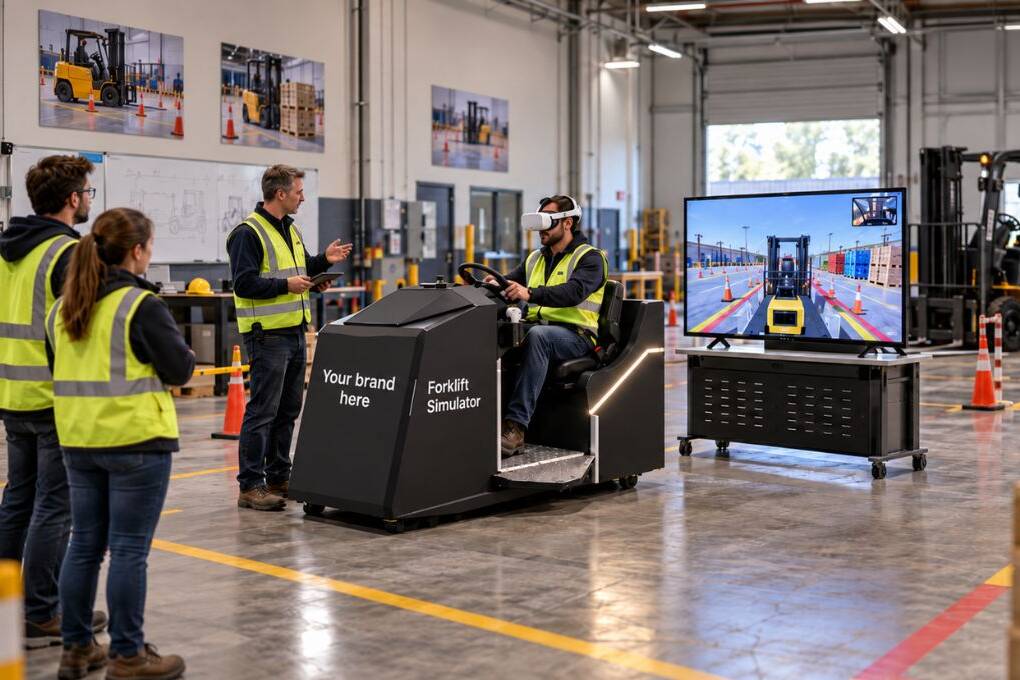
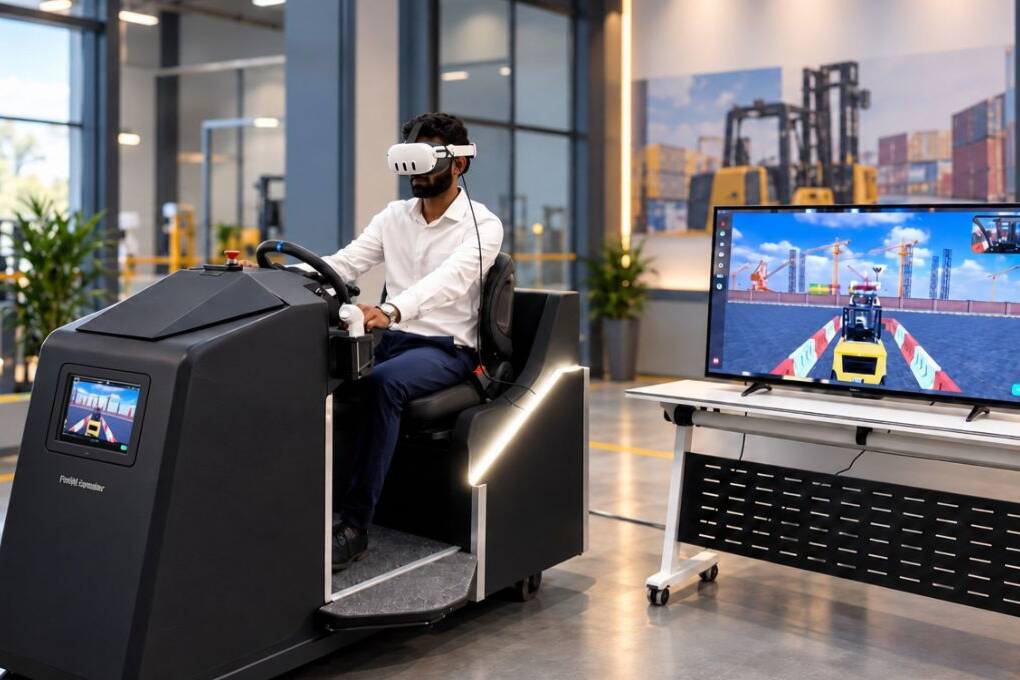
A prospective buyer puts on a headset and enters a simulated warehouse environment.
They can explore the operator’s viewpoint, familiarize themselves with the controls, approach a pallet, manoeuvre through aisles, and practise placing loads on storage racks.
The interaction can introduce operating concepts that are difficult to demonstrate in a crowded exhibition space.
For instance, depending on the simulation’s fidelity and customization, an OEM might allow visitors to experience:
- Warehouse manoeuvring: Navigate tight aisles and experience simulated turning and positioning tasks.
- Load handling: Approach pallet loads, adjust fork positions, lift and place loads within simulated conditions.
- Operator visibility: Explore the viewpoint from the driver’s position and identify potential visibility limitations.
- Safety scenarios: Encounter pedestrians, obstacles, and unsafe operating conditions in a controlled environment.
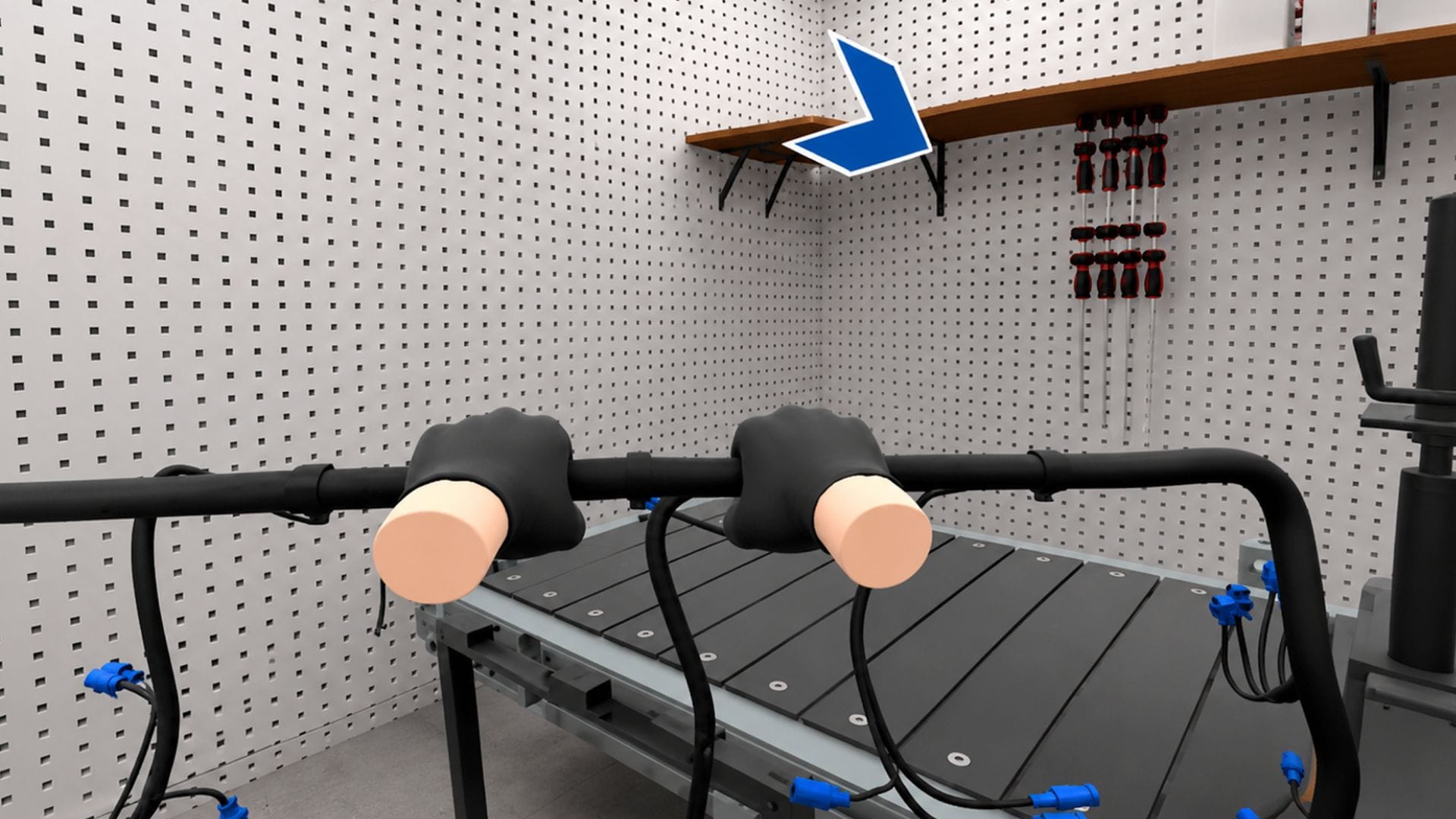
- Equipment controls: Understand the locations and functions of model-specific operating controls.
The purpose isn’t to replace a physical equipment demonstration.
It’s to give prospective buyers a meaningful introduction before they operate the real machine.
Can Interactive Experiences Improve Forklift Sales?
VR should not be presented as a technology that automatically increases forklift sales.
However, it creates opportunities to improve measurable stages of the buying process.
Instead of asking only how many visitors approached a forklift display, an OEM can measure how many visitors completed an interactive product demonstration, requested additional information, or progressed to a physical equipment evaluation.
Suppose a dealership handles 200 qualified prospects over a defined period.
It could compare sales outcomes for an interactive VR-assisted demonstration program against a conventional demonstration process.
Any difference would need careful interpretation. Customer type, product pricing, equipment availability, campaign activity, and sales personnel can all affect conversion.
The business question is not whether customers enjoy VR.
It’s whether the interactive experience helps customers understand the equipment, advances qualified sales conversations, and improves the buying journey.
That is what an OEM should set out to measure.
Extending the Experience Beyond the Sale
A potential advantage of equipment-specific simulation is its usefulness beyond the initial sales demonstration.
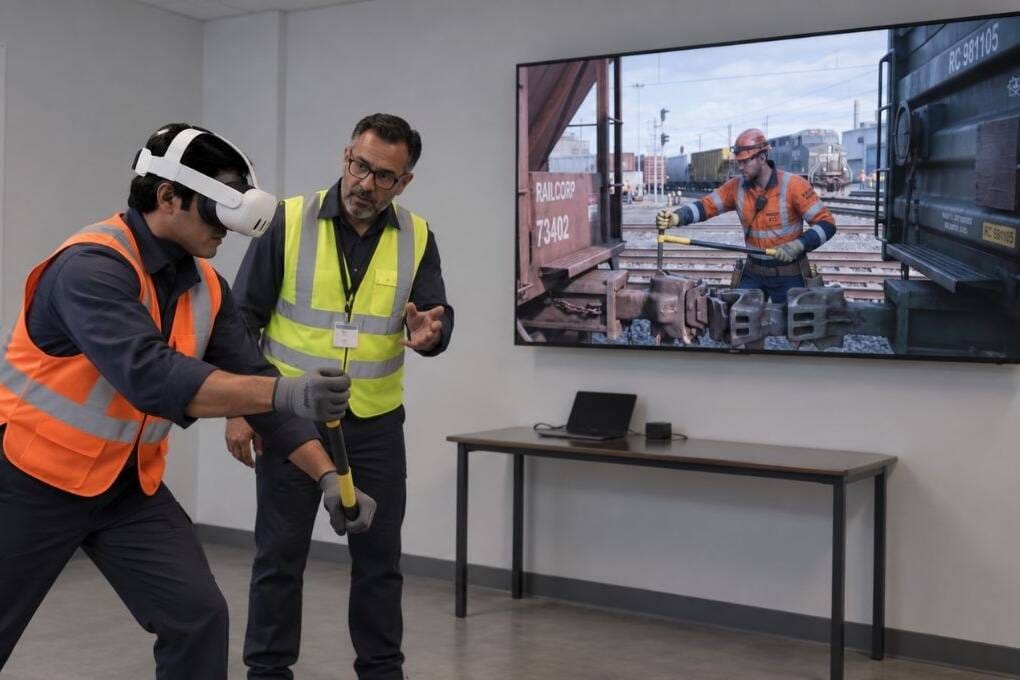
Once a customer purchases a forklift, the same underlying simulation platform could support operator familiarization and structured training, provided the content is designed and validated for those purposes.
Consider a warehouse introducing a new fleet of electric forklifts.
Before delivery, its operators could become familiar with simulated control arrangements, operating procedures, and selected handling scenarios.
After delivery, the employer would still need to provide the necessary real-equipment instruction, supervised practical exercises, and workplace performance evaluation.
Under OSHA 29 CFR 1910.178(l), VR is a supplementary learning tool rather than a substitute for the complete required practical training and evaluation process.
This creates a longer-term value proposition for OEMs.
Instead of offering only equipment and service support, the manufacturer can also offer technology that supports the customer’s operator preparation and ongoing training programs.
The commercial relationship can move from a one-time demonstration to a broader customer enablement experience.
How Spatio Can Help OEMs Build These Experiences
Creating a high-quality industrial VR experience requires more than displaying a 3D model of a forklift.
The simulation must account for equipment interaction, operating tasks, user responses, and the intended training or demonstration objectives.
Developing those capabilities from scratch requires specialized simulation design, 3D development, VR engineering, and testing.
Spatio offers a practical starting point through its ready-to-deploy Forklift VR Training Simulator, which can be customized for OEM use cases.
The existing simulator covers forklift-related operational scenarios, safety procedures, hazard recognition, emergency response, and assessment-based learning.
For OEMs interested in extending the platform into branded product experiences, Spatio offers customization options such as:
- White-label branding: Adapt the experience to the manufacturer’s identity.
- Equipment customization: Develop experiences around selected forklift makes, models, and control configurations.
- Environment customization: Represent relevant warehouses, tracks, and operational settings.
- Controller integration: Explore supported physical-control configurations for more hands-on interaction.
- Scenario customization: Align simulated tasks with equipment applications and operational requirements.
- Assessment and reporting: Configure learning or performance feedback where required.
An interactive product demonstration and a formal training simulator have different objectives. OEM-specific demonstration experiences, detailed equipment fidelity, and any special integrations would need to be defined and validated as part of the customization scope.
With this approach, OEMs can explore building branded experiences on an established VR simulation foundation rather than developing an entirely new platform internally.
The Future of Forklift Demonstrations Is Interactive
Forklift manufacturers have spent years improving the performance, reliability, and capabilities of their equipment.
The next opportunity may be in how those capabilities are experienced by customers.
A physical forklift demonstration will always provide insights that a simulation cannot fully reproduce.
But VR can introduce equipment experiences in places where physical operation is impractical, make selected operating scenarios easier to demonstrate, and provide a connection between product exploration and operator familiarization.
For OEMs, that means an opportunity to move beyond simply displaying a product toward helping customers understand its capabilities through interaction.
Spatio helps forklift manufacturers explore that opportunity through ready-to-deploy VR simulation technology, white-label branding, and equipment-specific customization.
Turn Your Forklift Demonstration Into an Interactive Experience
Explore how Spatio can help develop a branded VR experience for your forklift models, dealer network, or upcoming product launch.