Custom VR Training Modules

Shipyards and ports operate in some of the world’s most high-risk and complex environments. Spatio VR Safety and Operations Training Simulators enable your workforce to practice critical procedures and handle emergency scenarios in a safe, repeatable, and data-driven environment.

Our solutions are designed in collaboration with marine engineers and HSE professionals to replicate real vessel systems, cranes, dock machinery, and yard operations, allowing trainees to build confidence, accuracy, and operational discipline before entering live work zones.

Realistic Maritime Environments

Train for shipboard and dockside procedures in lifelike virtual environments

Compliance-Centric Design

Aligns with international HSE, ISPS, and IMO standards for compliance.

Enhanced Learning Retention

Reduce training time while improving skill recall through immersive repetition

Scalable Enterprise Deployment

Centralized training management for multiple yards and port locations

Our Solutions for the Shipyards & Shipbuilding Industry

We deliver specialized VR simulators built for the unique operational challenges of shipyards and ports:

Safety Training Simulators
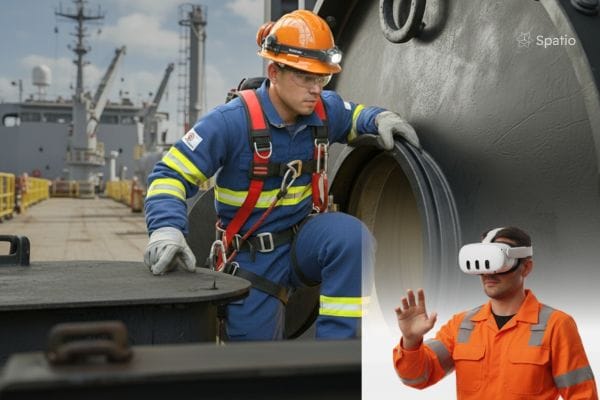
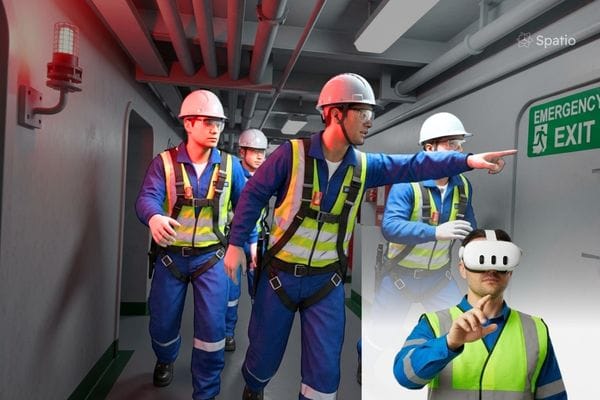
Confined Space Entry & Rescue

Confined Space Entry & Rescue

Practice safe entry, gas testing, continuous communication, standby coordination, and guided rescues inside tanks, ballast compartments, and vessel void spaces.

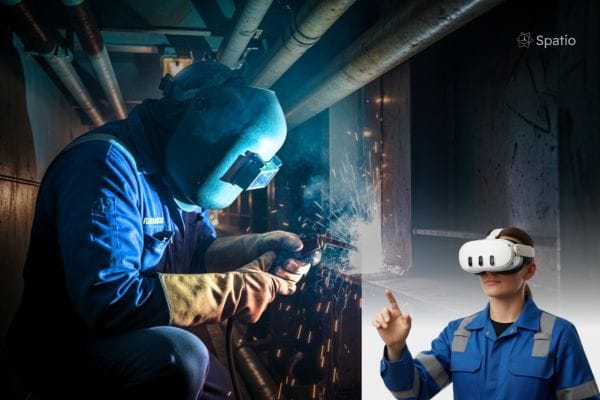
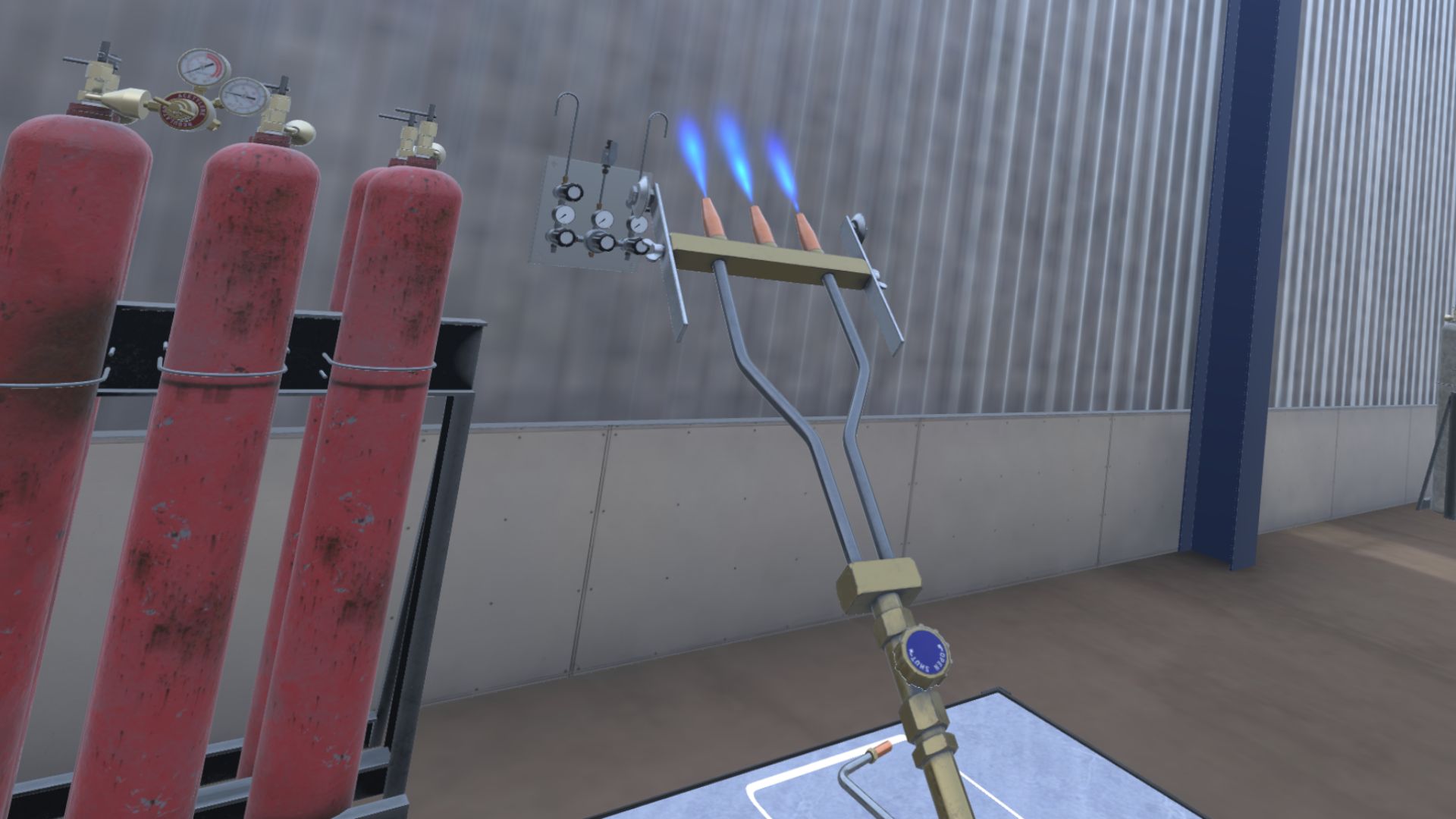
Hot Work & Welding Safety

Hot Work & Welding Safety

Rehearse welding workflows with permits, gas checks, fire watch, spark containment, PPE validation, and post weld inspections for documented compliance.

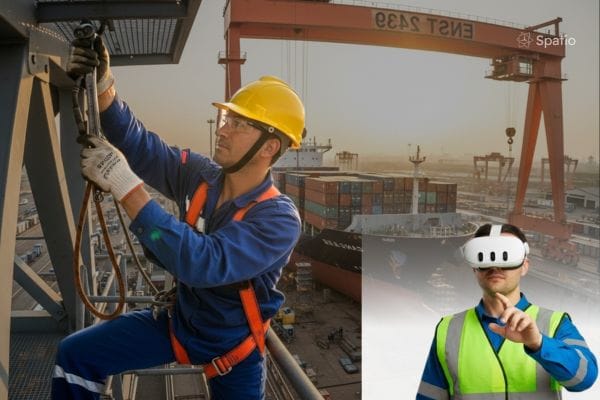
Work at Height & Fall Protection

Work at Height & Fall Protection

Master harness selection, anchor verification, scaffold movement, tool lanyards, edge awareness, rescue plans, and supervised drills for elevated maritime maintenance.

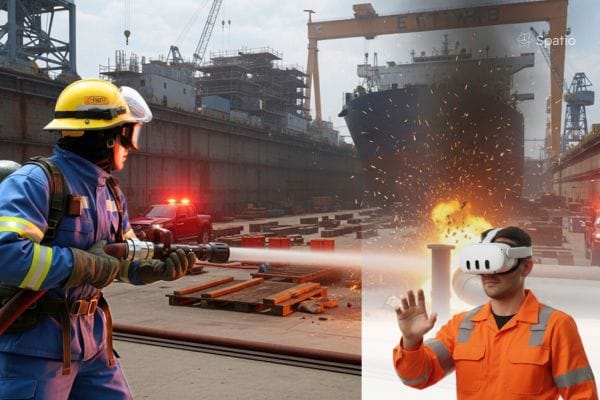
Fire & Explosion Response

Fire & Explosion Response

Train fire detection, alarm actions, suppression systems, boundary cooling, compartment isolation, evacuation routing, muster procedures, and incident reporting in simulations.

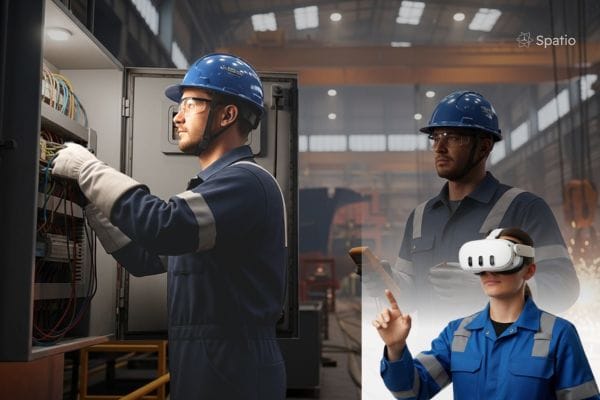
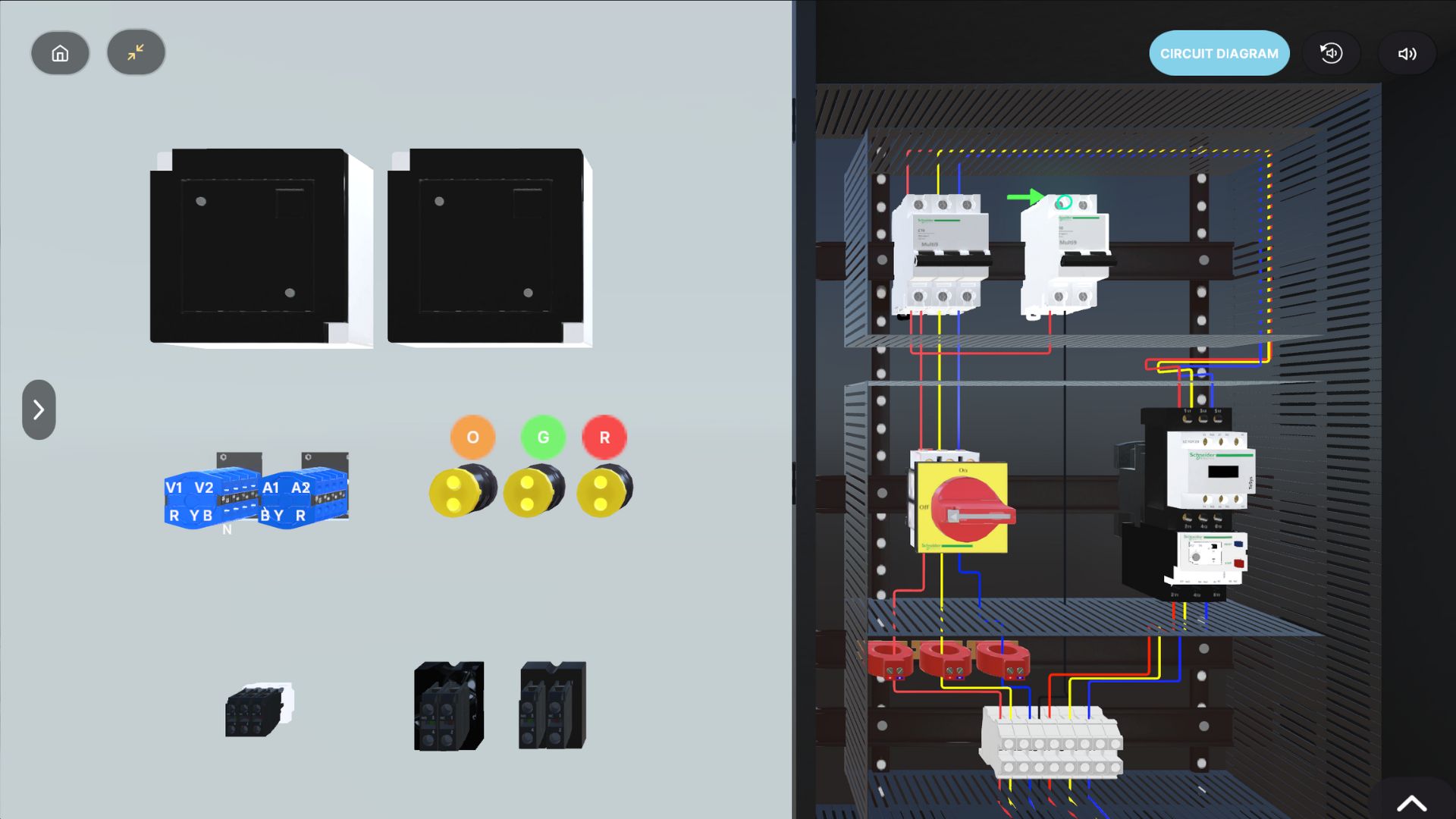
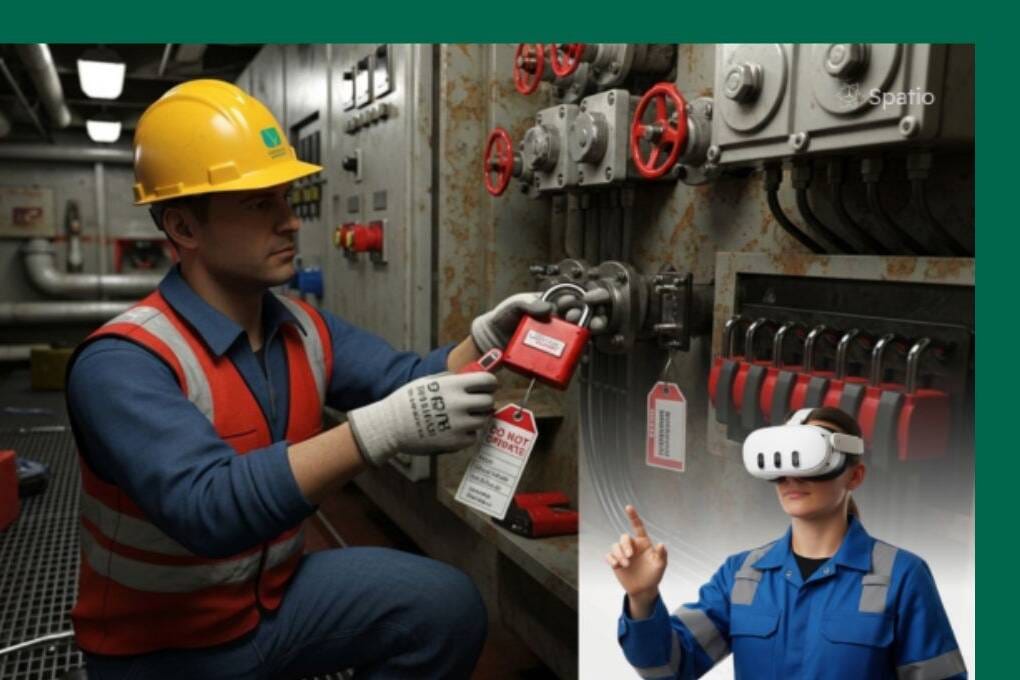
Electrical Safety in Maritime Environments

Electrical Safety Training

Learn isolation procedures, lockout tagout steps, instrument testing, grounding, moisture risk controls, and safe restoration protocols for shipboard electrical maintenance.

Emergency Muster & Evacuation

Emergency Muster & Evacuation

Rehearse muster signals, headcounts, route selection, smoke navigation, lifejacket use, lifeboat deployment, equipment checks, and debriefs to strengthen emergency readiness.

Operational Training Solutions

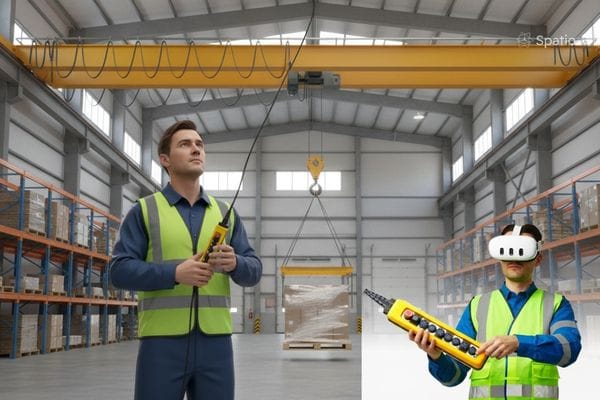
EOT Crane & Heavy Lifting

EOT Crane & Heavy Lifting

Operate EOT cranes virtually, with real controllers, practising load control, swing damping, hand signals, blind spots, taglines, rigging checks, and teamwork for lifts.

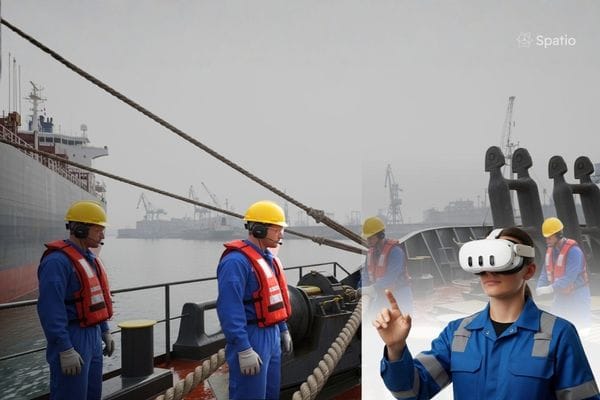
Berthing & Mooring Operations

Berthing & Mooring Operations

Practice mooring line handling, tension control, heaving lines, bollard selection, chafe protection, clear communications, and contingency actions during berthing operations.

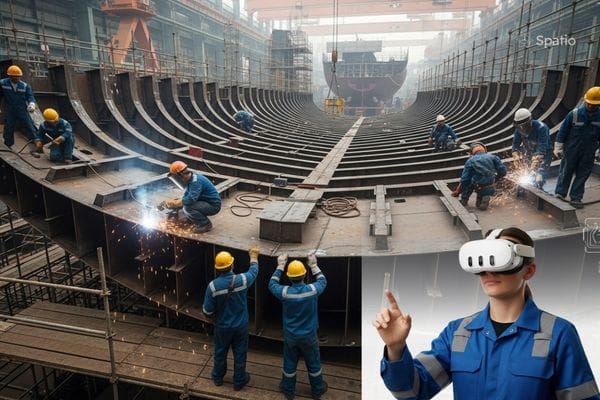
Hull Construction & Drydocking

Hull Construction & Drydocking

Understand hull block alignment, docking plans, flooding cycles, keel blocks, safety practices, workflows, and coordination across trades during drydocking operations.

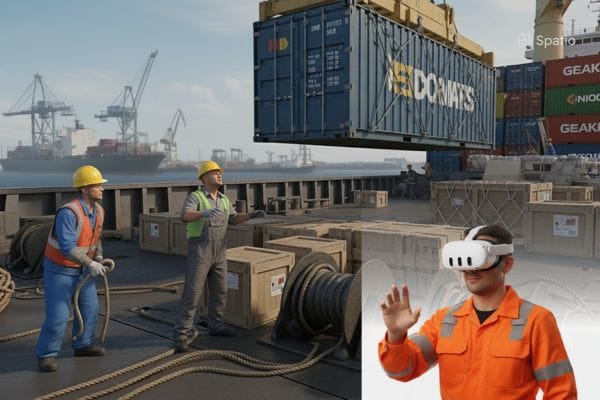
Dockside Cargo Handling

Dockside Cargo Handling

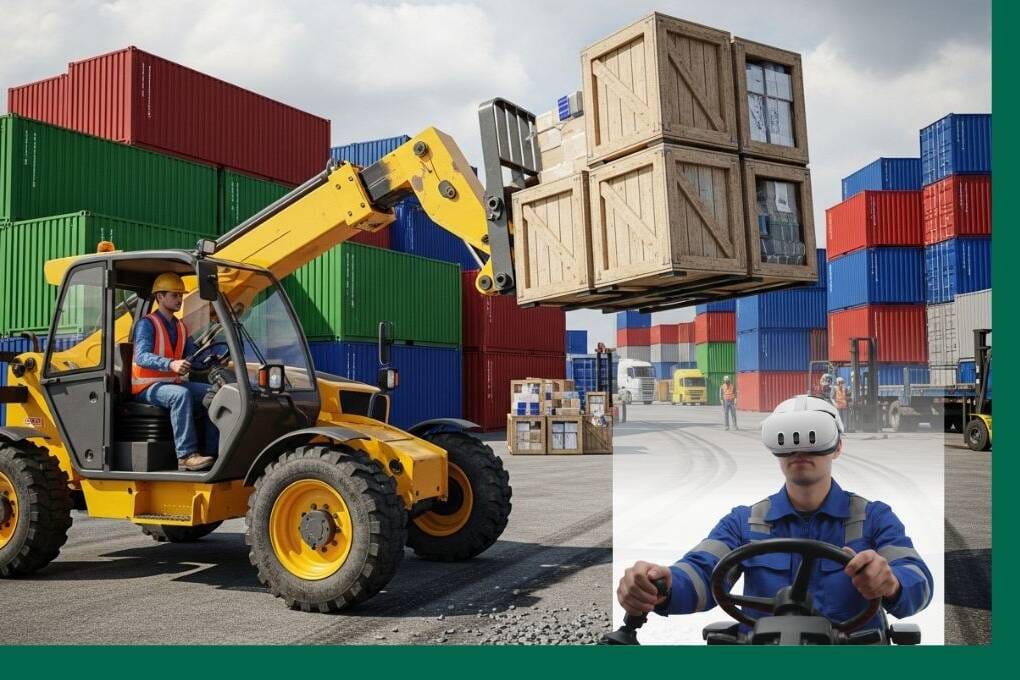
Train container stacking, lifting attachments, traffic control, pedestrian zones, marshalling signals, protocols, and interactions to reduce collisions and improve throughput.

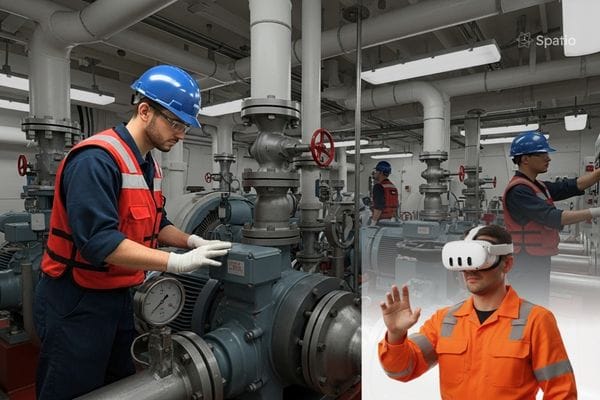
Pump Room & Fluid Transfer

Pump Room & Fluid Transfer

Perform loading, discharge, valve lineups, pressure monitoring, leak checks, bonding, grounding, emergency shutdowns, and handovers for safe liquid transfer operations.

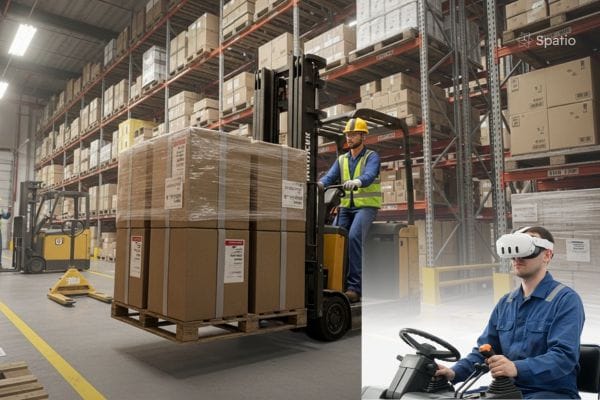
Forklift & Yard Vehicle Safety

Forklift & Yard Vehicle Safety

Practice manoeuvring in tight lanes, reversing controls, load stability, stacking heights, pedestrian awareness, spotter communication, parking discipline, and preuse checks.

Who We Are

Spatio is a trusted developer of custom VR training simulators for high-risk industries, including shipbuilding, ports, LNG, and oil & gas.

Our team combines engineering expertise, maritime domain knowledge, and instructional design to create practical training tools aligned with your operational standards, safety protocols, and compliance frameworks.

Impact of our work

30+

Industry-Specific Modules

47%

Reduction in Accidents

60%

Faster Onboarding

70%

100% Alignment with Standards

Contact Us


    Case Studies

    What Our Clients Say

    Hear from maritime leaders who transformed their training with Spatio VR.

    Crane and mooring teams-built confidence faster. Supervisors can review sessions and target the exact skill gaps before live work.

    Operations Manager

    Global Port Operator

    Frequently Asked Questions

    Get answers to common questions about our VR safety and operations training for shipyards and ports.

    VR places crews inside realistic scenarios such as confined space entry, fire response, and crane lifts. Repeated practice builds muscle memory and better decision making. Clients report fewer training related incidents and faster readiness for live tasks.

    Yes. Modules can reflect your yard layout, vessel areas, cranes, pump rooms, mooring stations, and permits. Procedures, checklists, and lockout tagout steps can match your standards so training transfers directly to site work.

    Spatio supports major headsets including Meta Quest, Pico, and HTC Vive. We guide you on headset selection, space planning, and device management for single site and multi site deployments.

    Dashboards show completions, assessment scores, errors, and time to competency. Session playbacks help supervisors review technique. Data exports to your LMS or HR system support audits and compliance reporting.

    Yes. Voice and on-screen text can be localized to English, Arabic, Hindi, Urdu, and other languages used by your teams.

    Standard maritime modules are ready in three to five weeks. Fully customized programs that mirror your equipment and SOPs usually take eight to twelve weeks from kickoff to rollout, including testing and onboarding.

    Have more questions? Our team is here to help.

    Contact Our Experts

    News & Insight

    We share the latest breakthroughs, innovations, andupdates in the XR & AI industry
    View Blog

    Privacy Preference Center