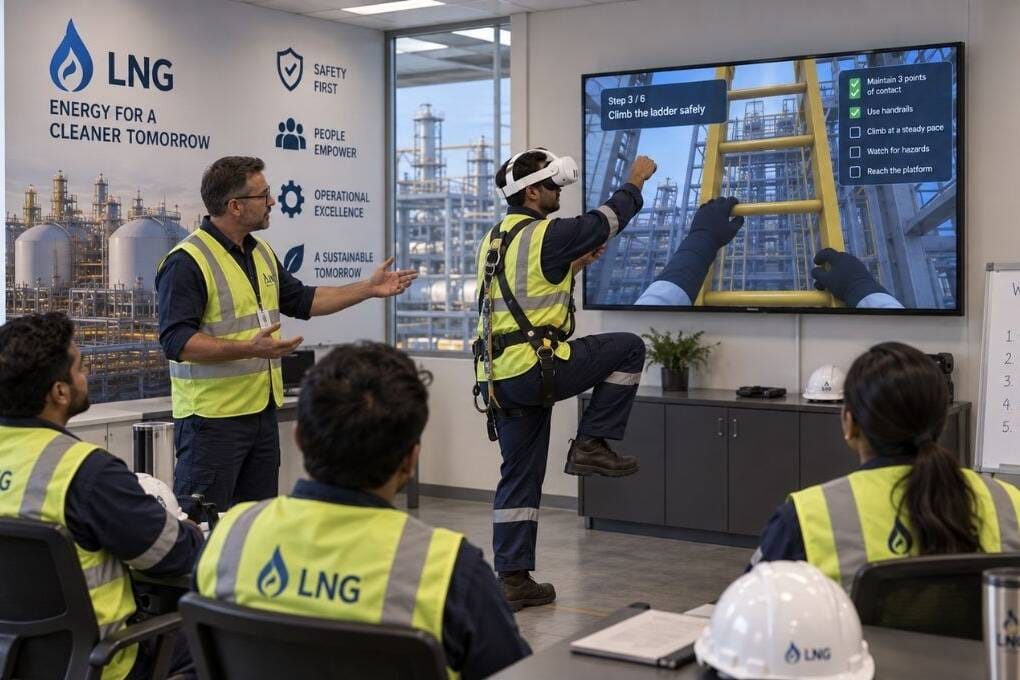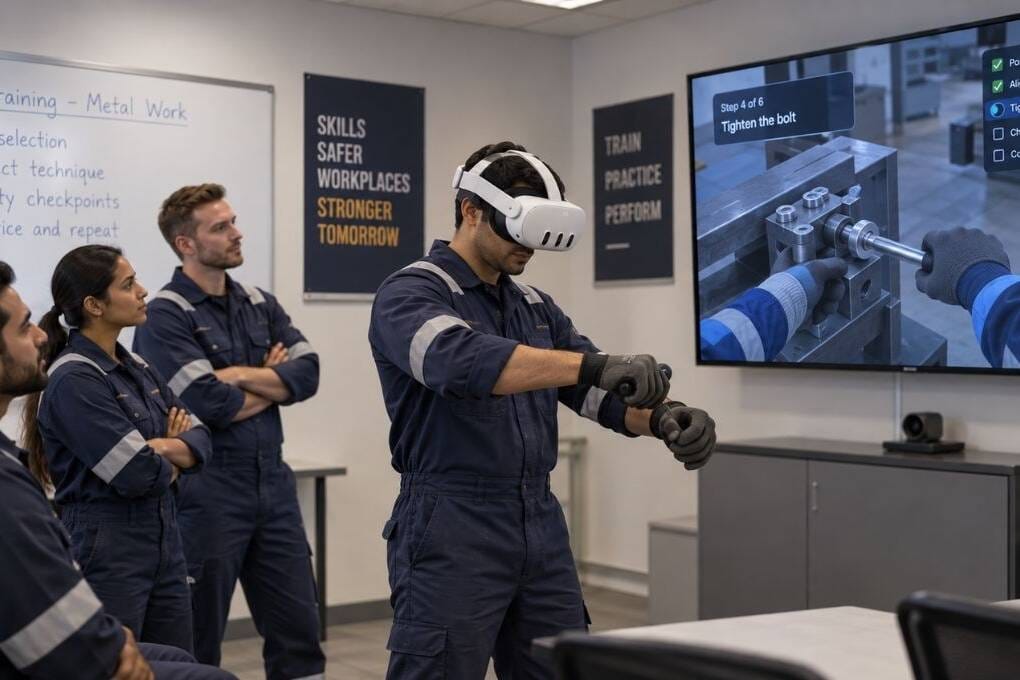
Which Headset is the best fit for Industrial VR Training Apple Vision Pro or Meta Quest 3?
At Spatio, we don’t just build immersive VR training experiences. We are equally obsessed with what happens after the module is deployed at the client’s premises.
Because in industrial training, success is not defined by how stunning a demo looks. It is defined by how smoothly training runs across shifts, how confidently workers use the device, how quickly it can be deployed at scale, and how easily safety teams can manage it day after day.
That is why choosing the right VR headset is as critical as designing the training itself.
As new devices launch, we actively test and review them from one lens only:
Does this headset work for real industrial VR training environments?
Two devices dominate conversations today: Meta Quest 3 and Apple Vision Pro. Both are powerful. Both are impressive. But they are built for very different realities.
Let’s break them down honestly.
First, the core difference no spec sheet tells you
The most important difference between these two headsets is not resolution, processing power, or brand prestige.
It is intent.
- Meta Quest 3 is designed to be used repeatedly, by many people, in operational environments.
- Apple Vision Pro is designed to be experienced personally, one user at a time, in controlled conditions.
That single distinction shapes everything else.
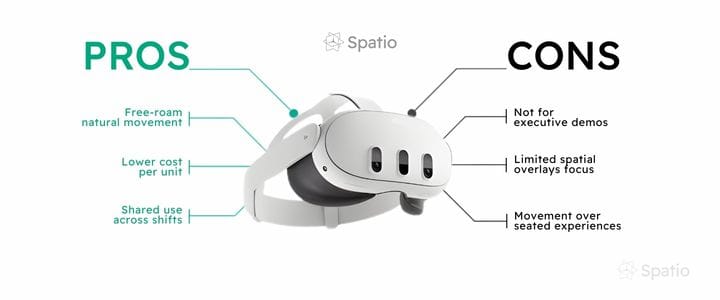
Training Realism: Free movement vs Controlled Interaction
Industrial VR training depends on physical realism. Workers need to move, turn, reach, lift, react, and sometimes make mistakes under pressure.
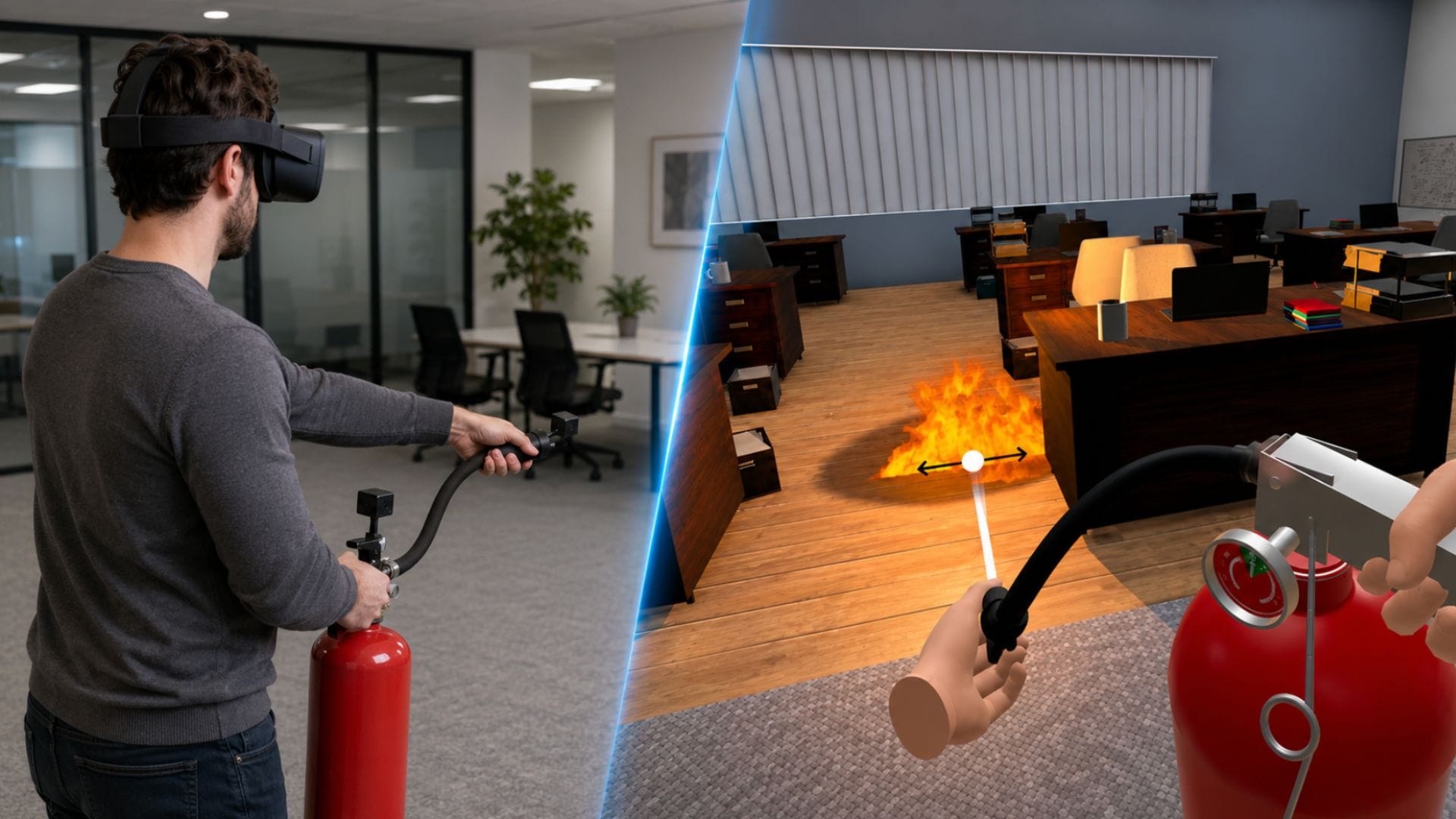
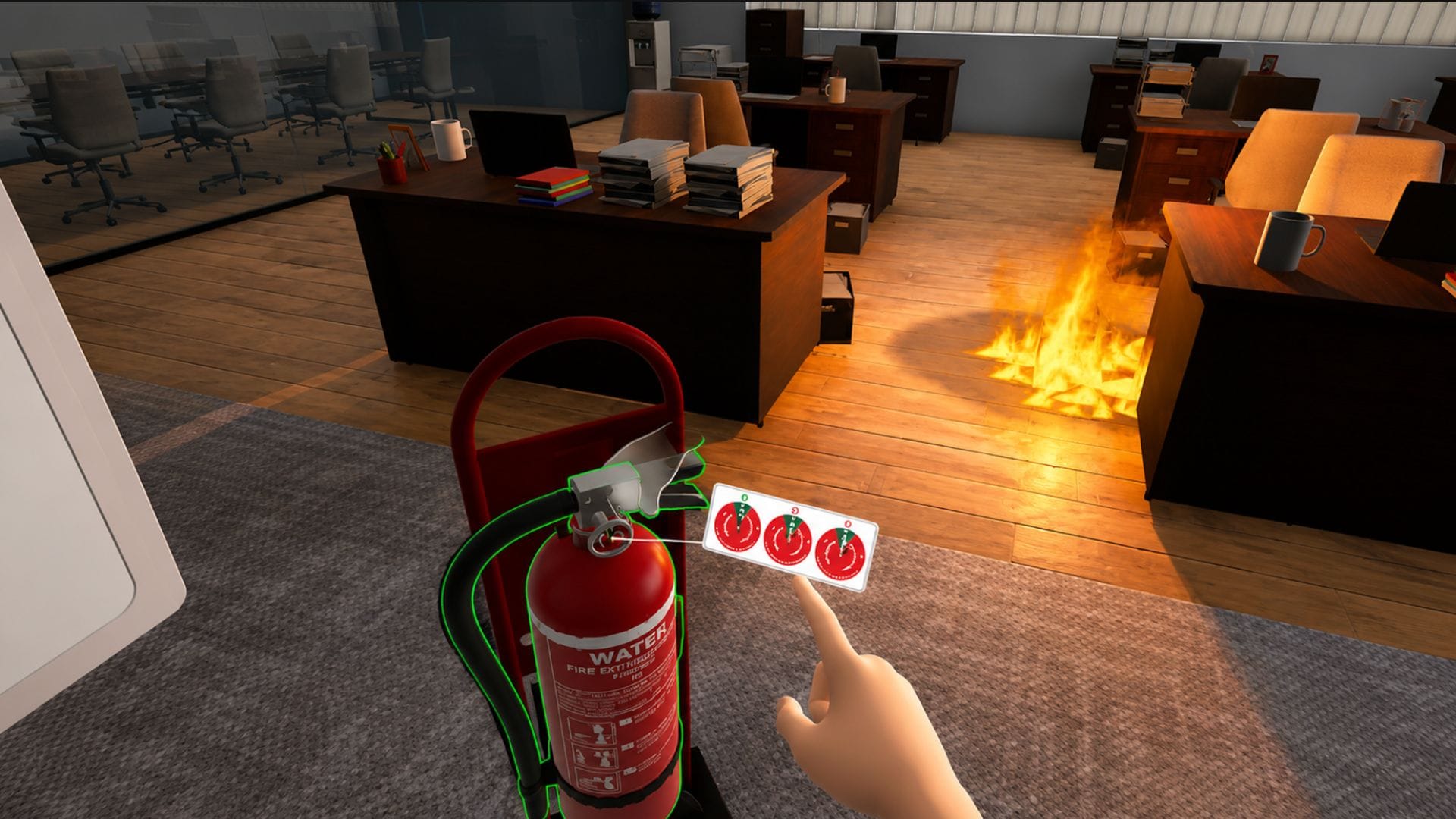
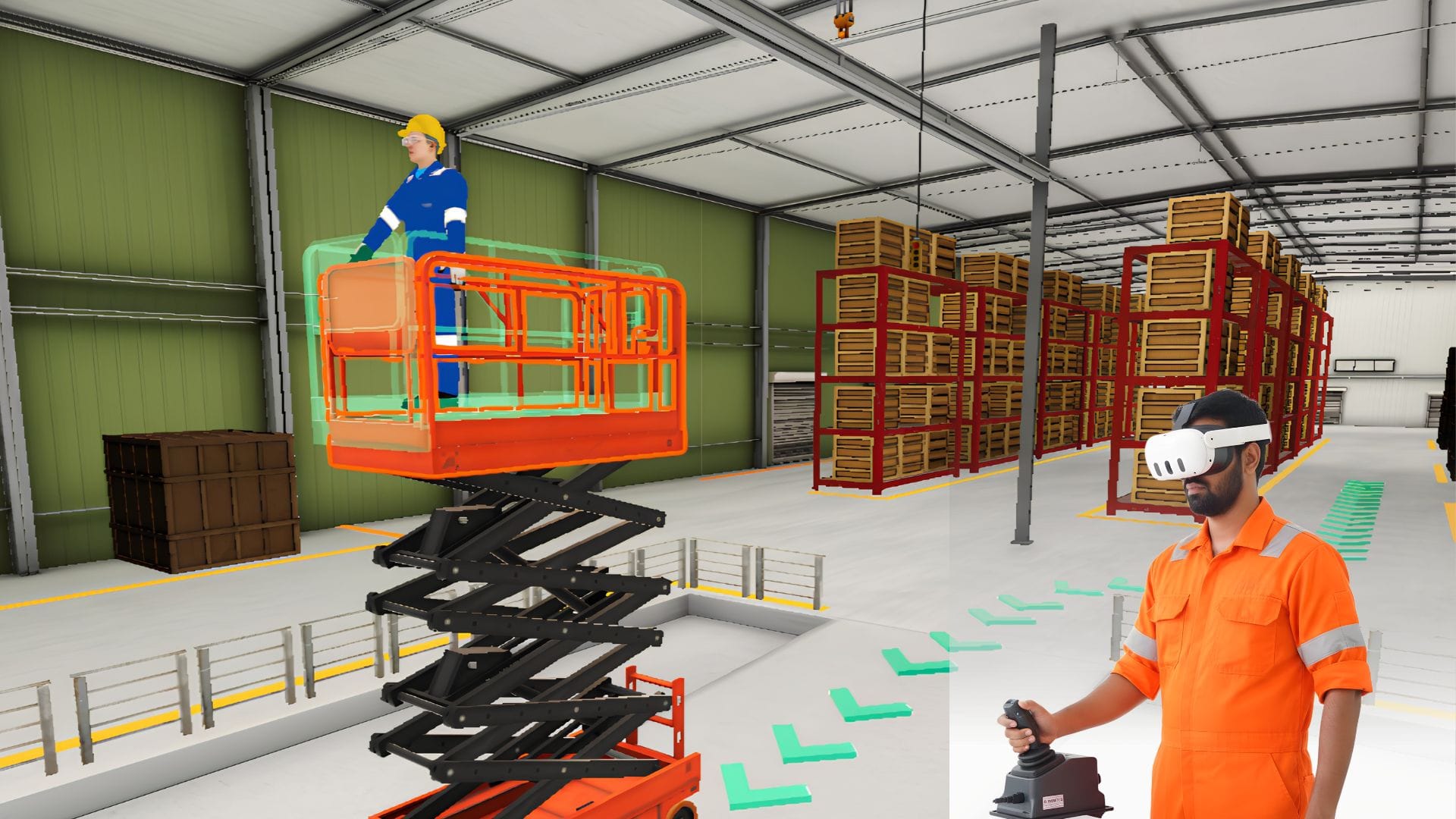
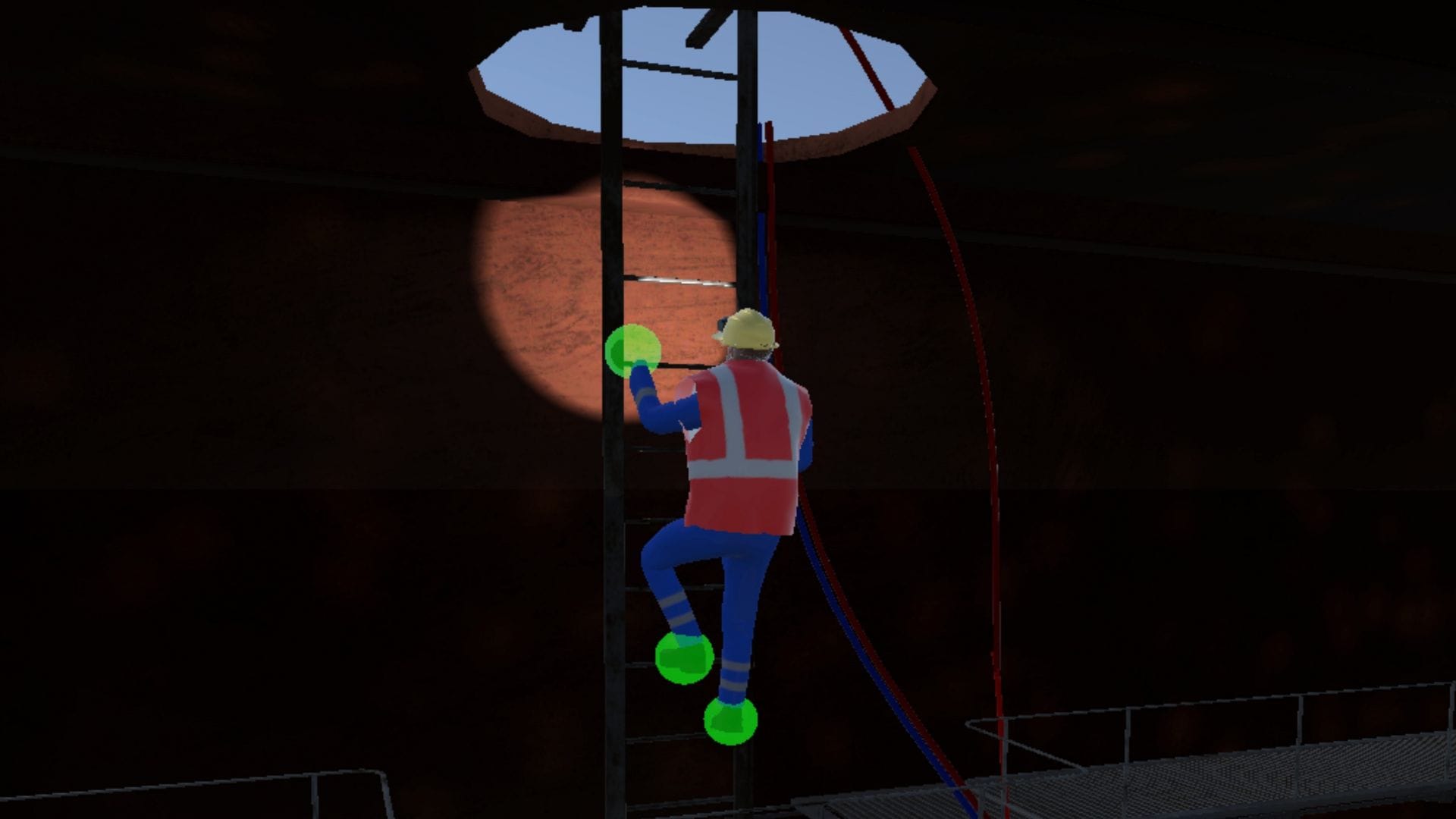
Meta Quest 3 supports free-roam training, allowing workers to replicate job-site movement patterns naturally. This makes it suitable for safety drills, confined space simulations, equipment operation, and emergency response training.
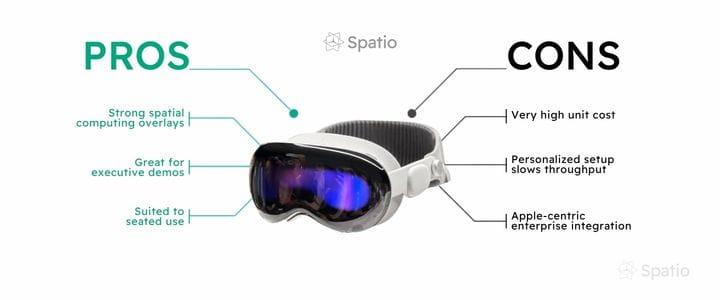
Apple Vision Pro, on the other hand, is fundamentally a seated or limited-movement device. Its strength lies in spatial computing and visual overlays, not in replicating full-body job-site behavior. For immersive demonstrations, design walkthroughs, or executive previews, this works beautifully. For high-risk safety training, it becomes a constraint.
In industrial training, movement is not optional. It is the training.
Cost Reality: Scaling training vs Showcasing technology
VR training only delivers ROI when it can be scaled across the workforce.
With Meta Quest 3 priced at approximately AED 2,200 per unit, organizations in the Middle East can deploy 8 to 9 headsets within a AED 22,000–25,000 budget.This makes batch training, parallel sessions, and faster workforce coverage realistically achievable across shifts and contractor teams.
In contrast, Apple Vision Pro, priced above AED 18,000 per unit, consumes nearly the same budget for a single device. Training becomes sequential by necessity.
Workers wait their turn. Throughput slows. Operational schedules feel the impact.
From an industrial VR training perspective, this difference is not marginal. It directly affects training scalability, adoption speed, and overall ROI.
Batch Training and shift operations: where theory meets reality
Industrial training rarely happens in isolation. It happens across shifts, departments, and contractor groups.
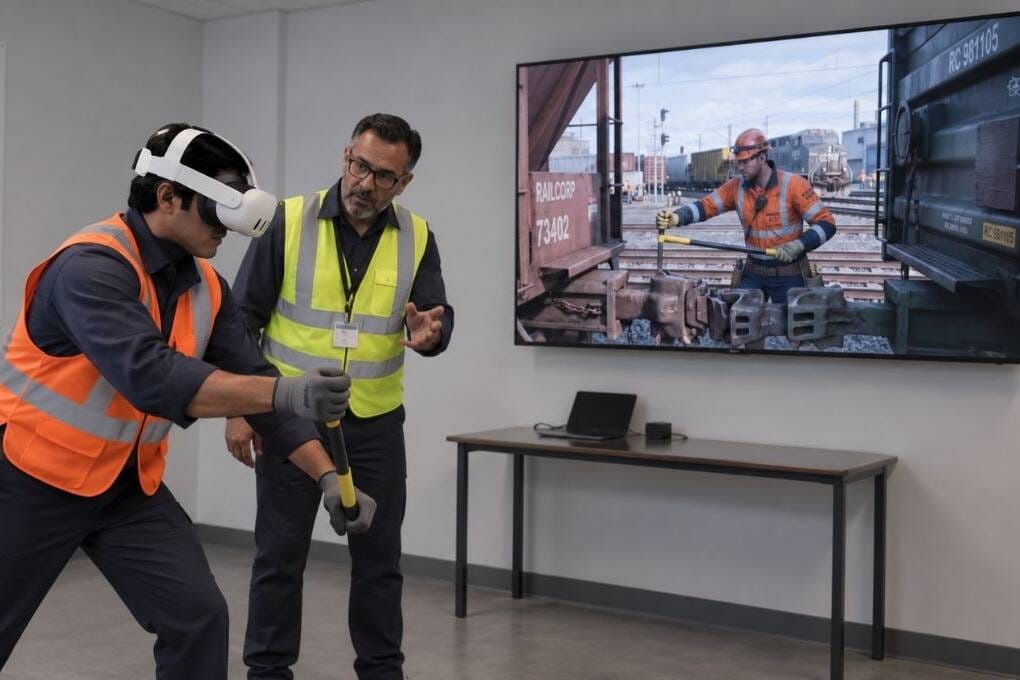
Meta Quest 3 is built for shared usage. Multiple workers can use the same headset across shifts with minimal friction. Controllers and real-time hand tracking ensure predictable interactions, even for first-time users.
Apple Vision Pro is a personalized device. Each user must go through recalibration before use. In practice, this slows down sessions and introduces hesitation, especially among shop-floor workers who are not tech-native.
Learning curve: shop-floor comfort vs cognitive load
In industrial environments, the best technology is the one workers forget they are wearing.
Meta Quest 3 uses physical controllers combined with real-time hand tracking. Actions feel intentional and repeatable. Workers understand cause and effect quickly, which reduces onboarding time and trainer dependency.
Apple Vision Pro relies on predefined gesture systems and eye tracking. While elegant, it introduces a learning curve that can distract workers from the actual training objective.
IT and infrastructure fit: operational ecosystems matter
Most industrial organizations operate on mixed IT ecosystems. Training platforms must integrate smoothly with existing LMS, identity systems, and security frameworks.
Meta Quest 3 is platform-agnostic and works comfortably within heterogeneous IT environments. When configured correctly, it can integrate with enterprise authentication systems and device management workflows.
Apple Vision Pro is deeply Apple-centric. Device management, ecosystem dependency, and integration limitations make it harder to deploy at scale in non-Apple industrial IT environments
Hardware ruggedness and risk exposure
Industrial training environments are not labs. Devices are handled by many users, often wearing PPE, sometimes under time pressure.
Meta Quest 3 is comparatively rugged, with lower financial impact in case of damage or loss. This reduces usage anxiety and encourages adoption.
Apple Vision Pro is premium hardware, both in build and perception. The financial risk of damage is high, which often leads to over-protection, limited access, and cautious usage. Ironically, this undermines training adoption.
Deployment speed: how fast can training actually start?
From our deployment experience, speed matters.
Meta Quest 3 can be deployed quickly, configured in batches, and rolled out across training centers with minimal friction.
Apple Vision Pro deployments are slower due to ecosystem dependencies, personalization requirements, and cautious handling. This makes it better suited for curated experiences rather than operational training programs.
So which headset is better for industrial VR training?
The honest answer is this:
Meta Quest 3 is built for workforce training at scale.
Apple Vision Pro is built for premium spatial experiences.
If your goal is safety training, operator readiness, compliance drills, and industrial simulations, Meta Quest 3 aligns far better with real-world constraints.
If your goal is executive demos, customer experiences, or design visualization, Apple Vision Pro has undeniable appeal.
The future of industrial training is immersive, measurable, and scalable.
Choosing the right headset is not a branding decision. It is an operational one. And in today’s industrial reality, the headset that trains more people, faster, with less friction, wins.