The Compliance Data Revolution: Why VR Is the Only Way to Guarantee Audit-Proof Confined Space Readiness in 2026

By 2026, confined space compliance in shipyards will no longer be judged by how well procedures are written. It will be judged by how clearly organizations can prove that their people can execute those procedures under pressure. Across Middle Eastern shipyards, audits are shifting from document verification to competence verification. The question auditors increasingly ask is not “Do you train?” but “Can you prove that training works?”

This change is not theoretical. Maritime authorities, client auditors, and safety bodies are tightening expectations around confined and enclosed space entry, atmospheric testing, rescue preparedness, and procedural discipline. In this environment, Virtual Reality is not just another training medium. It is becoming the only practical way to generate audit-proof, defensible evidence of confined space readiness at scale.

Why compliance expectations are changing

Confined spaces in shipyards remain one of the most dangerous working environments in maritime operations. Ballast tanks, voids, double bottoms, and enclosed compartments behave unpredictably, especially during hot work or cleaning operations. International maritime guidance has consistently highlighted that enclosed spaces must be treated as unsafe until proven otherwise, with strict controls around authorization, atmosphere testing, and continuous monitoring.

What has changed is how compliance is evaluated. Auditors are no longer satisfied with attendance records and toolbox talk sign-offs. They want to see proof that workers can identify hazards, follow correct gas testing sequences, interpret readings accurately, and make the right decision when conditions change. In shipyard environments where contractors rotate frequently and workforces are multilingual, this expectation creates a serious gap between compliance on paper and competence in practice.

The limits of traditional training in an audit-driven world

Traditional confined space training was designed for awareness, not verification. Classroom sessions explain procedures, mock-ups demonstrate concepts, and periodic drills attempt to reinforce behavior. But these methods struggle to recreate real vessel geometry, real environmental stress, and real decision-making complexity. More importantly, they do not scale well, and they do not generate consistent, objective evidence.

When auditors ask how often workers practice confined space entry, many shipyards struggle to answer with confidence. Live drills are expensive, disruptive, and limited in frequency. Supervisory assessments vary by individual, and language barriers often hide comprehension gaps. The result is a system where training is completed, but readiness remains assumed rather than proven.

Why VR changes the compliance equation

Virtual Reality fundamentally alters how confined space readiness can be validated. Instead of measuring participation, VR measures performance. Every action a trainee takes inside a VR scenario is recorded, time-stamped, and evaluated against defined procedural logic. This turns training into a data-producing safety control rather than a one-time instructional event.

In a well-designed confined space VR program, trainees must execute the same permit-to-work logic, atmospheric testing sequence, PPE selection, and decision points they face on site. If a step is missed or performed out of order, it is logged. If a hazardous reading is ignored or misinterpreted, it is recorded. Over repeated sessions, patterns emerge that show where competence is strong and where it is weak. This is the level of evidence modern audits are beginning to expect.

From training records to compliance data

The most significant shift VR introduces is the creation of a compliance data layer. Instead of relying on attendance sheets, organizations gain access to structured competence records that can be traced to individuals, roles, contractors, and SOP versions. This allows safety teams to demonstrate not only that training occurred, but that it resulted in measurable capability.

This matters deeply for confined space entry because regulatory frameworks emphasize correct sequencing and decision-making. In shipyard standards, atmospheric testing must follow a defined order, and entry decisions must be based on verified conditions. VR can enforce these rules consistently and capture whether workers comply with them every time. When auditors ask for proof, safety teams can respond with data, not assumptions.

Why VR aligns with stricter maritime oversight

Professional safety bodies and maritime authorities increasingly emphasize competence, verification, and continuous improvement. IOSH frameworks stress the importance of demonstrable capability in managing occupational risk. Maritime safety guidance reinforces the need for training, drills, and auditability around enclosed space entry and rescue preparedness.

VR aligns naturally with this direction because it combines repeatable practice with measurable outcomes. It allows shipyards to train more frequently without increasing risk, while simultaneously producing structured records that support internal reviews and external audits. This combination is difficult, if not impossible, to achieve with traditional methods alone.

The role of digital twins and AI-driven verification

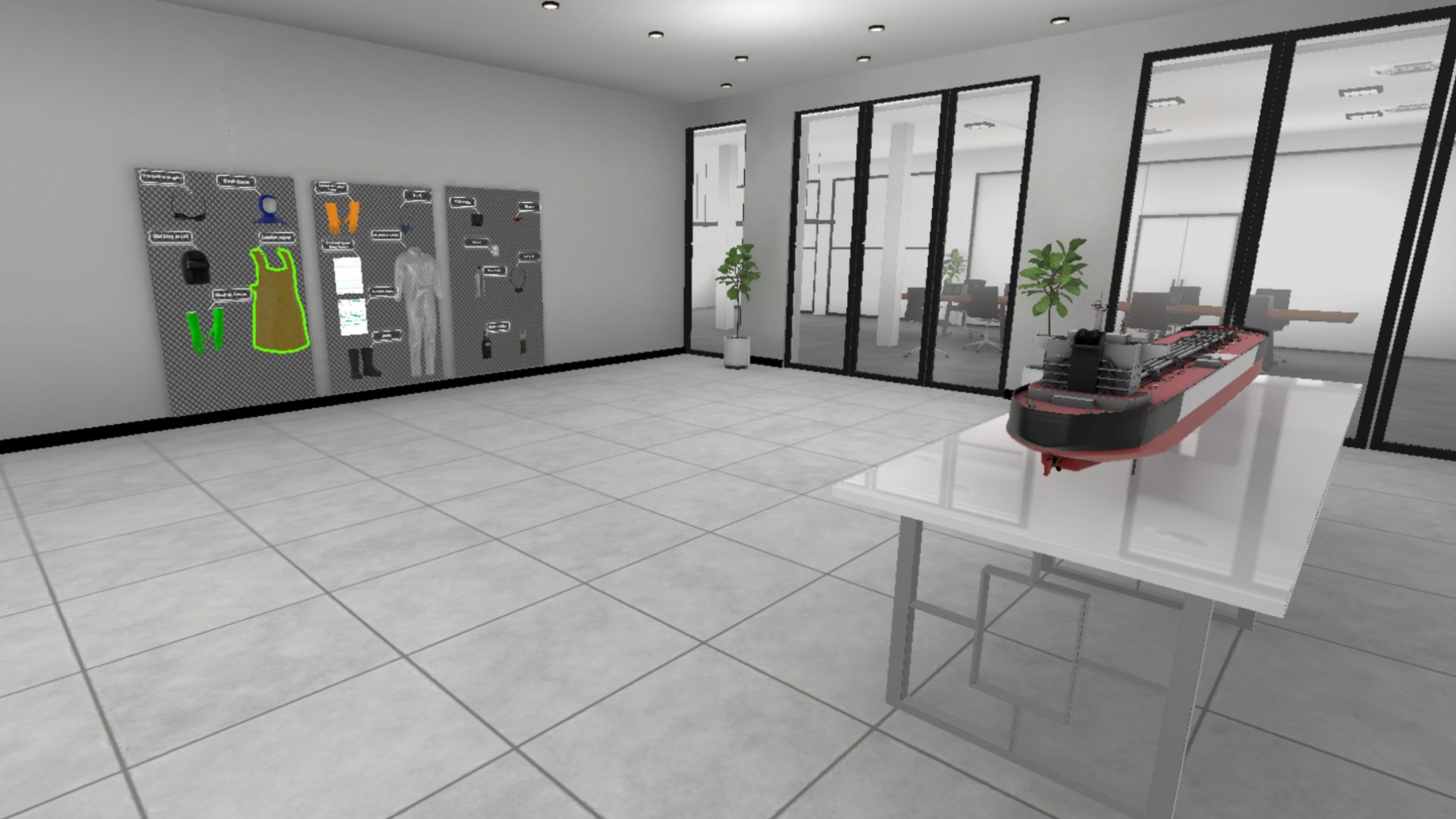
Not all VR delivers the same compliance value. Generic simulations may look impressive but fall short during audits. For compliance to hold, VR environments must reflect the operational reality of the shipyard. Custom digital twins allow confined space training to mirror actual vessel layouts, access points, ventilation constraints, and rescue paths. This ensures that the behaviors trained are directly transferable to real work.

AI-driven analytics then elevate this further by identifying patterns across training data. Repeated errors, slow reaction times, or hesitation at critical decision points become visible at a management level. This allows targeted retraining and proactive risk control, strengthening the safety management system rather than just the training function.

What audit-proof readiness looks like in 2026

In 2026, audit-proof confined space readiness will not be defined by how many people attended training. It will be defined by how confidently an organization can demonstrate that its workforce consistently follows correct procedures, understands hazard escalation, and is prepared for abnormal conditions.

VR enables this by turning competence into evidence. It supports multilingual workforces through experiential learning, reduces dependence on subjective assessment, and creates a defensible trail of readiness that aligns with evolving regulatory expectations across the Middle East maritime sector.

Conclusion

The compliance data revolution is already underway. As audits become more demanding and confined space risks remain unforgiving, shipyards can no longer rely on training methods that produce awareness without proof. Virtual Reality stands apart because it does what traditional training cannot: it converts learning into verifiable, audit-ready data.

For shipyards planning their safety and compliance strategy beyond 2026, the question is no longer whether VR will be adopted, but whether confined space readiness can be credibly defended without it. In a regulatory environment where evidence defines trust, VR is fast becoming the only path to guaranteed audit-proof compliance.

Related Posts

Privacy Preference Center