
VR work at heigh safety training

What is VR Work At Height Safety Training?

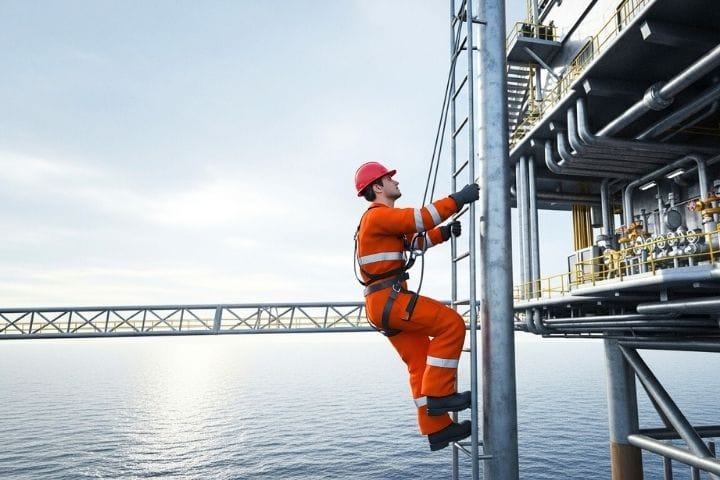
Virtual Reality Work At Height Safety Training uses immersive simulations to train workers for elevated environments scaffolding, rooftops, ladders, and suspended platforms. It replaces passive learning with experiential training that builds spatial awareness, hazard identification, and emergency response skills.

Our VR Safety Training Solutions eliminate real-world exposure while reinforcing procedural accuracy, PPE usage, and situational decision-making. This approach leads to better knowledge retention, lower incident rates, and faster onboarding for high-risk roles.

Our Immersive Safety Training Modules for Work At Height

Our workplace VR safety training solutions cover a comprehensive range of high-risk scenarios. Each module is designed to replicate realistic height-based environments and test critical thinking in live scenarios.

Fall Protection Training

Workers learn to inspect and wear fall protection gear, attach harnesses to anchor points, and apply fall arrest procedures.

Rescue Operations Module

Simulates high-pressure emergency scenarios such as suspended falls or unconscious coworkers. Trainees practice rescue protocols, teamwork, and equipment deployment.

Ladder Climbing and Ladder Safety

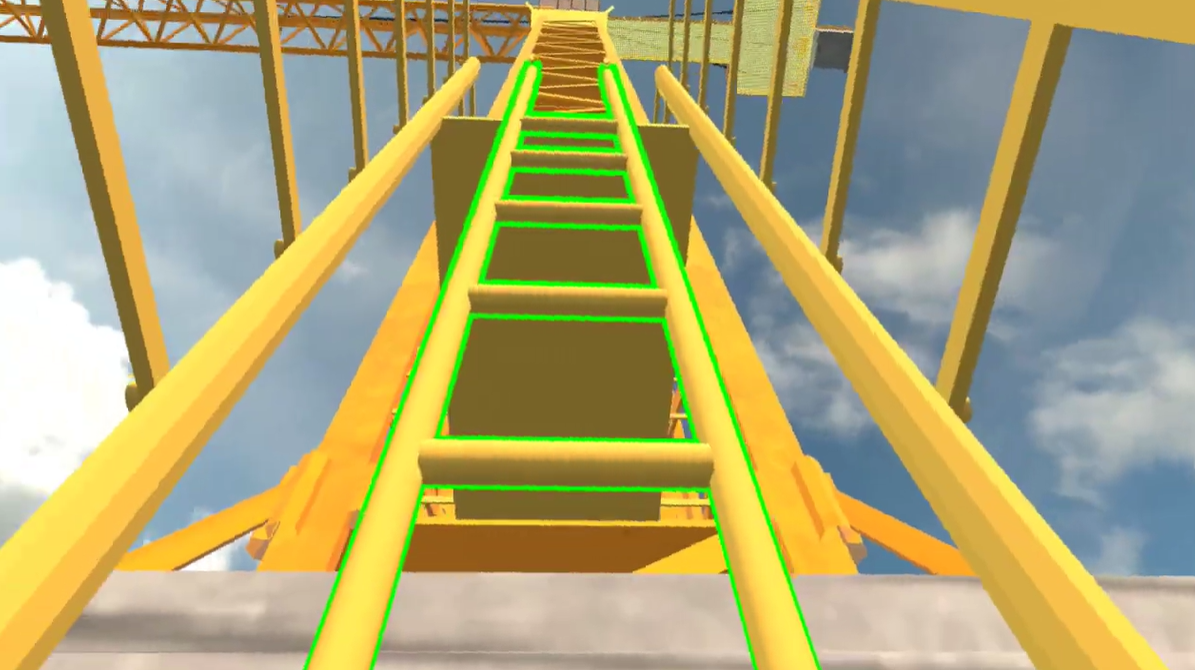
Teaches proper ladder selection, setup, and climbing techniques using various ladder types in VR.

Man Lifter Operation Module

Trains users in maneuvering boom lifts and scissor lifts in complex environments with variable elevation and obstacles.

Roof Sheeting Safety Simulation

Simulates real-world rooftop tasks, including sheet installation and fire safety during construction or maintenance.

Window Cleaning at Height

Designed for high-rise maintenance professionals, this module teaches safe window cleaning techniques from elevated access points.

How VR Safety Training Helps High-Risk Industries

Our VR Safety Training Solutions reduce the gap between theory and field-readiness. Organizations across shipyards, ports, infrastructure, and industrial maintenance rely on our simulators to:

  • Minimize accidents during actual work at height
  • Improve safety audit scores and regulatory compliance
  • Scale safety training across multiple job sites and geographies
  • Enable risk-free practice with measurable performance tracking
  • Train faster and more effectively without disrupting operations

Realistic simulations lead to faster learning, deeper engagement, and significantly fewer on-site errors.
VR safety training
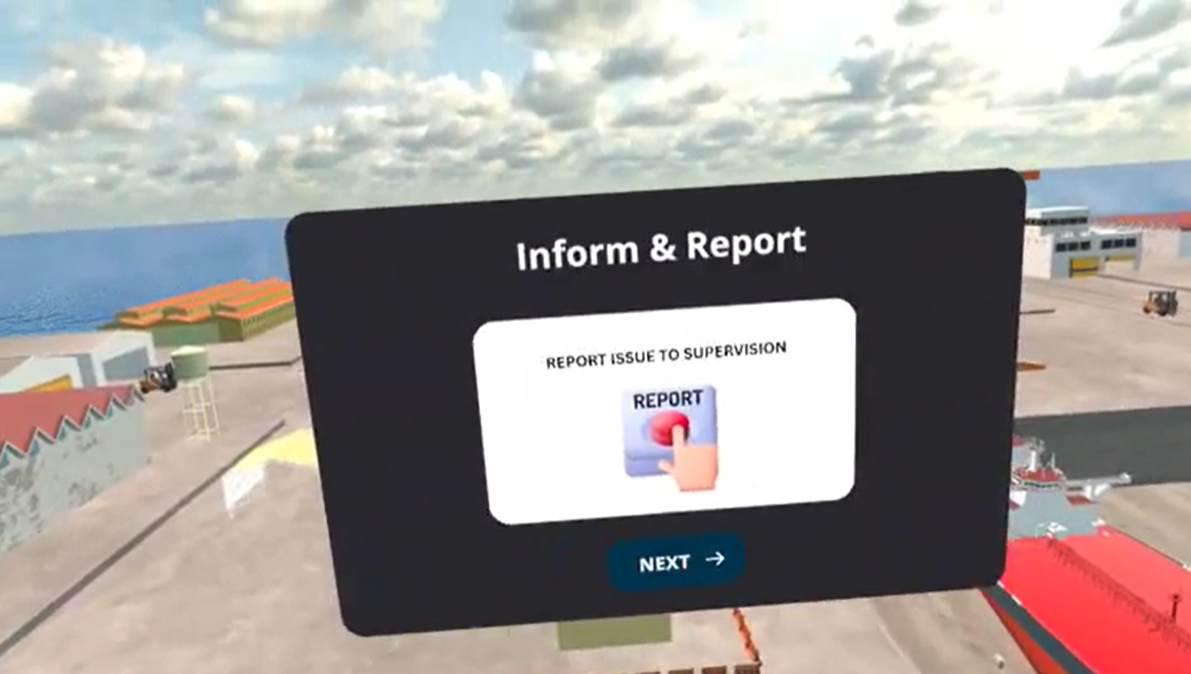
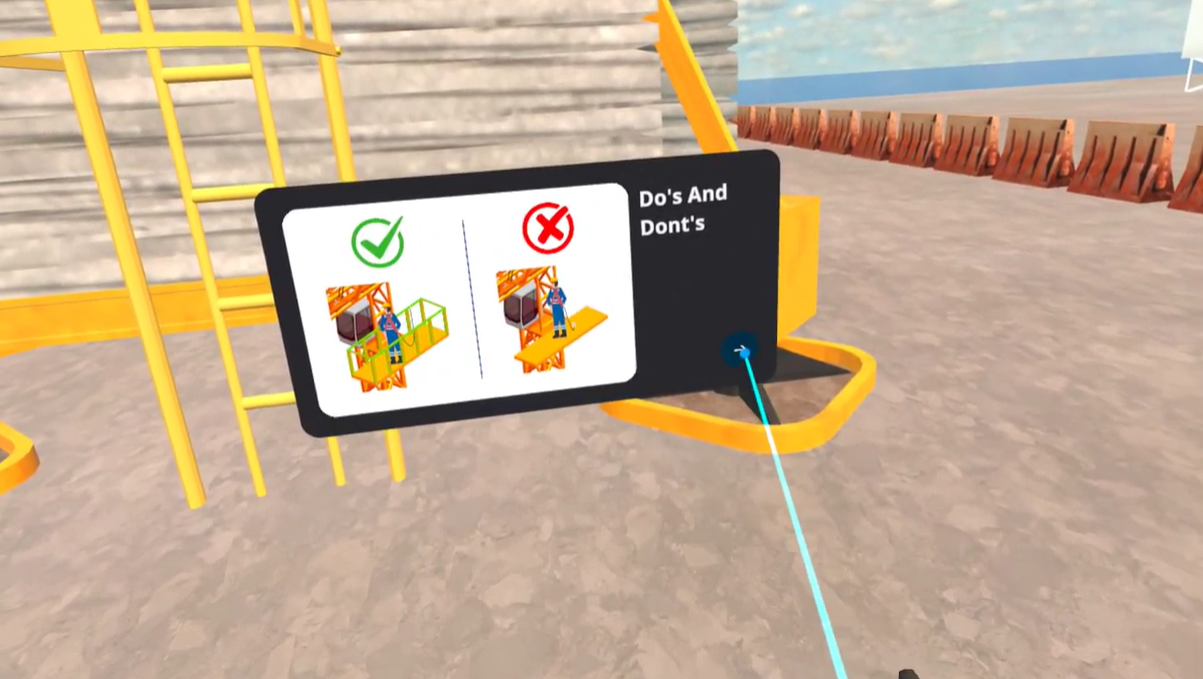
VR Work at height safety training simulator

Benefits of Immersive VR Health & Safety Training Solutions

  • Enables high-frequency, scenario-based training without physical setup
  • Reduces the cost and complexity of traditional training methods
  • Builds confidence in handling real equipment and environments
  • Tracks individual performance using AI-driven analytics and in-headset feedback
  • Enhances memory retention through experiential learning

Organizations using VR safety training have reported:

  • 75% reduction in training time
  • 43% fewer injuries after implementation
  • 30% higher satisfaction and engagement among trainees

Why Choose Spatio tech for Work At Height Safety Training

  • Immersive Learning Suite: Industry-specific modules designed to meet safety benchmarks
  • Device-Agnostic Deployment: Compatible with Meta Quest, Pico, and enterprise-grade VR headsets
  • Web 3D and AR Readiness: Supports both browser-based learning and on-site AR instruction
  • AI-Driven Personalization: Each learner gets a custom path based on performance and feedback
  • Remote Device Management: Provision, control, and monitor VR devices across locations
  • Enterprise Support: From setup to scaling, our team supports training teams at every step

With Spatiotech, safety training becomes scalable, data-driven, and field-ready.
Spatio
Spatio

Frequently Asked Questions

Business challenges like Safety Incidents, Dependency on Equipment or Trainer for Training Delivery, Impossibility of Training ( Safety Risk, Rare Scenarios ), Scalability of Training, Reducing Training Cost to support the Churn Rate etc are addressed by Immersive Learning Solutions.

Immersive Learning Content can be deployed in your existing ecosytem of Learning Management Systems to ensure Training Management is seamless. Also from a hardware point of view, solutions such as AR Instruction Manuals, Web based 3D Interactive Learning can easily be deployed in existing end user devices without the need to invest in new infrastructure.

Public reports talk of 40% improvement in Productivity, 50% faster time to production for the Trainee,and 40% reduction in Safety Incidents.

The Initial Cost of Developing Immersive Learning content is directly proportional to the Concepts, Activities and SoPs that you want to create the Learning Content for. As a high level indication, taking a 20 Step SOP as a benchmark, the cost for Web based Learning would be around 10,000 USD, AR Instruction Manual could be 15,000 USD, VR Simulator would be 20,000 USD. The cost could be driven higher by factors such as Integrations required, modes such as Learning Mode & Evaluation Mode, Languages requred etc.

Every work we do is bespoke and tailored to our clientele’s own SoP, Processes, and Environments.

We offer both Onsite Deployment Support and Online Uptime Support. Onsite deployment support consists of technicians and engineers who deliver onsite knowledge transfer and deployment to ensure the technology is seamlessly deployed, and the relevant stakeholders are trained in day to day operations and troubleshooting of the platform.

Our remote uptime support will ensure any major issues are addressed effectively.

The application is protected via an SSO ( Single Sign On ) Integration and the executables are all end to end encrypted. Even if a bad actor gets access to the VR Device on which the application resides, they wont be able to extract any data.

The VR Training Content themsleves reside locally on the device, while the training reports and data are stored on the cloud ( LMS’ Cloud ). The local file is secured by an SSO login, and executable files are encrypted.

Absolutely. All three forms of Immersive and Interactive Learning are scalable in their own rights. While AR and Web based learning can be easily scaled to 1000s of direct end users, VR Simulators too can be scaled to train 100s of Trainees at each facility in the form of VR Classrooms of Batch Size of 10-20 VR Kits.

Our onsite deployment team will ensure the Prospective users are encouraged, and motivated to try out the Implementation. We will also be capturing the End User’s feedback much before deployment thus removing any potential friction in adoption.

Our Immersive and Interactive solutions are built keeping Human Factor Design principles in mind, and the entire lifecycle is designed with minimum touchpoints to begin with. Even with respective to Immersive VR Simulators, the Simulators leverage Hand Tracking, which means the trainees use their hands in the VR World, instead of complex controllers, meaning there is no learning curve from the technology perspective. Apart from these, we also deliver an onboarding module that trains the user on the special interfaces if any.

Certainly, I shall be sharing the case studies and success stories from both other verticals, and leaders from the space of _____ ( Customer Vertical )

We do not work in off the shelf content, as we have experienced that the customisations that our customers end up requiring are better, and more effective to be built from ground up vs starting from a template.

We do have the building blocks of the Programming, Assets and Design that we costumise and deploy for your unique requirement, all with passing on the benefit to you.

For a batch of 10 VR Users, we have found 3-5 devices to be apt, to further run the VR Batch, Trianing sessions, each of them requiring about 10-30 Sq. Feet of space.

there is a small pool of people who are naturally pre disposed to motion sickness, but this number is too small.

Dizziness, or motion sickness happens when the user is put in a virtual space that is being moved without the user’s control or intention – Like being a passenger in a moving car. Since most ouf the training simulators would involve the users being in control of their movements, motion sickness is highly avoided.

Headquarter

P.O.Box No. 7184, Office No: 203, White Crown Building, Plot No. 335 - 335, Sheikh Zayed Road, Dubai, UAE

Email
Telephone

(212) 555-1234


    Privacy Preference Center